Yesterday I friend who has been unhappy with her weight for years asked for advice as to what to do to get her weight under control. This friend has tried every fad diet that has come down the pike and while she may have lost a few pounds on each, it always came back and then some.
So here's what I told her:
1. Dieting fucks up your system. If you lose weight too quickly your body says "what the fuck????" and then works to put it back on pronto.
2. Always eat the calories for the weight you want to be. Look up how many calories you can eat a day for the weight you want to be for your height, weight and age. Factor in physical activity, etc., then try to stick to it for the rest of your life. If you eat for the weight you want to be, eventually you will be that weight. If you have a big meal one day, eat less until you make up the difference. Remember that as you age, you have to eat fewer calories to maintain that same weight.
3. If you're eating too many calories now, reduce to the amount you want to be at gradually. See number 1 above as to the reason why.
4. Learn to distinguish between food cravings and true hunger. Chances are you haven't actually experienced a true hunger pain in your entire life.
5. Don't eat processed foods. If it comes from a bag, jar, box or bag and has ingredients you can't pronounce, just do not eat it.
6. Eat any bad foods you truly love in moderation. If you try to just deny yourself what you really love, you won't stick to a plan for the rest of your life.
7. At least 75% of your diet should be plant based. Meat, fish and dairy products should be the exception and not the rule.
8. Of that 75% at least 50% should be raw, uncooked fruits and vegetables.
9. Refined carbs should be a rare treat. If you're going to eat bread, pasta or rice, make sure they are whole grains.
Tuesday, August 16, 2011


Monday, August 15, 2011
The Truth About Protein
Whenever someone asks me about my weight loss, I tell them about my mostly raw, vegan diet. This inevitably prompts what I call "the protein question," either "how do you get your protein?" or "aren't you afraid you're not getting enough protein?" or some other question along those lines.
I'm bringing this up today because I saw this on-line article that discussed the actual amounts of protein we really need. The reality being, that people vastly over-estimate how much protein we actually need and this actually leads to an over consumption of protein. As the article states:
I've blogged before that I got quite a bit of inspiration as to how to lose weight and keep it off from the book Skinny Bitch.
I should warn you that if you haven't read Skinny Bitch already it's pretty much a vegan screed trying to induce you to become a vegan in the name of being slim.
Now, I'll never be a vegan (or vegetarian for that matter), but the book sites a lot of very interesting research to back up their cause (the footnotes and end notes are amazing.) I too was under the "I need vast quantities of protein" misconception until I read Skinny Bitch and realized that not only was I eating far too much protein, but that that over consumption could lead to illness.
The other misconception I labored under was the best source of that protein. When I started my weight loss journey, I assumed that if I was not eating vast quantities of meat, fish and dairy I would be protein deficient. I now know that not only can I get enough protein from plant sources, but it's actually higher quality protein.
As the article states:
I'm bringing this up today because I saw this on-line article that discussed the actual amounts of protein we really need. The reality being, that people vastly over-estimate how much protein we actually need and this actually leads to an over consumption of protein. As the article states:
In fact, the average person eats about double the amount of protein that their body requires, according to the results of 2007-2008 National Health and Nutrition Examination Survey conducted by the Centers for Disease Control and Prevention.
I've blogged before that I got quite a bit of inspiration as to how to lose weight and keep it off from the book Skinny Bitch.
I should warn you that if you haven't read Skinny Bitch already it's pretty much a vegan screed trying to induce you to become a vegan in the name of being slim.
Now, I'll never be a vegan (or vegetarian for that matter), but the book sites a lot of very interesting research to back up their cause (the footnotes and end notes are amazing.) I too was under the "I need vast quantities of protein" misconception until I read Skinny Bitch and realized that not only was I eating far too much protein, but that that over consumption could lead to illness.
The other misconception I labored under was the best source of that protein. When I started my weight loss journey, I assumed that if I was not eating vast quantities of meat, fish and dairy I would be protein deficient. I now know that not only can I get enough protein from plant sources, but it's actually higher quality protein.
As the article states:
Whole grains, seeds, and some vegetables also contain protein, so consuming enough is not difficult even if you don’t eat meat. Vegetarians and vegans can easily get what they need by balancing complimentary proteins such as corn and beans or rice and tofu. Nutritionists used to recommend combining foods at the same meal, but research now shows that is unnecessary.
Friday, August 12, 2011
Wasn't Kate Middleton Skinny Enough????
I'm always amazed at the profound need of catalog producers and magazine editors to take skinny women and photoshop them to the point that they look abnormal. Case in point, Kate Middleton in her wedding dress.
Check out the dreadful photoshop next to one that's not as dreadful here.
Frankly, I think the Duchess looks better before the waist slimming.
Check out the dreadful photoshop next to one that's not as dreadful here.
Frankly, I think the Duchess looks better before the waist slimming.
Thursday, August 11, 2011
Another Reason To Go Organic
Organic agriculture fights the spread of antibiotic resistent bacteria. A new study confirms that the wide-spread use of antibiotics on livestock causes naturally occuring microbes to become resistent to drugs. The new study, was headed by Amy Sapkota of the University of Maryland and published in Environmental Health Perspectives.
Wednesday, August 10, 2011
Too Poor to be Thin? CTD
Earlier this week I posted why I disagreed with a new study stating that it was too expensive for the poor to eat better quality foods.
Well, I'm not alone. I saw this post on the Huffington Post and thought it was worth noting.
Like me, the author blasts the "too poor to be thin" meme as nothing but an urban myth, saying:
I say, that no matter what the budget, it is possible to eat healthy and be thin. As the author of this blog acknowledges, but doesn't state clearly, it's just a matter of learning HOW to do so.
Also, like me, he argues that one of the primary problems is not WHAT the poor eat but HOW MUCH they eat. We are now living in an age of cheap food, and cheap calories, but the "more is better food-wise" still holds a lot of sway. The more food and calories a dollar buys is primary, and more important than the inherent nutritional quality of the food.
Instead of "more is better" the poor should be taught that their their food dollars are best spent on better quality, not better quantity.
Well, I'm not alone. I saw this post on the Huffington Post and thought it was worth noting.
Like me, the author blasts the "too poor to be thin" meme as nothing but an urban myth, saying:
Like everyone else, I had heard innumerable times that "more nutritious food costs more," but was never very impressed with the data given to support the claim. So my colleagues and I generated some. We designed a simple experiment: we gave a volunteer shopper criteria for more and less nutritious foods, and had her pick examples of both from multiple food categories. We paid the grocery bill, so she didn't need to worry about prices. We then compared the cost of more and less nutritious foods, category by category, from soup to nuts (well, soda to snacks, anyway). We found no difference. In almost every aisle of almost every supermarket, it's possible to trade up nutrition substantially without spending more money.
So why don't people routinely do so? Cluelessness. I don't mean that as an insult -- I mean literal lack of the clues required to identify the more nutritious foods that don't cost more!He also brings up the health care cost issue as I did:
Next, there's tunnel vision. We think of the costs of food as if money spent on food has no impact on any other money we spend or make. This is certifiable nonsense. The personal costs of eating badly are enormous: ill health, obesity, high medical bills, absenteeism, presenteeism, lower income. Economists routinely think in terms of "externalities" -- the costs or savings associated with a choice that don't show up on the price tag per se. When thinking about the true costs of our food choices, we would be well advised to do likewise. Eating well is an investment in health, and health provides rich returns in both human potential and dollars.Finally, he brings up what I always say, the focus is too much on quantity of food, not quality. After all, isn't it patently obvious that someone weighing 300 pounds is just eating way too much? Here's what he says:
Lastly, there is a cultural anachronism. Think, for a minute, about how you measure food value. If you are like most people, it's simple: more is better. The all-you-can-eat-buffet exemplifies this attitude, as does "super-sizing."I like this guy's thinking. Like me, he doesn't give in to the meme, he challenges it. To say the poor have no choice, is to give them no hope, and when you have no hope, you don't try.
But is more really better? In an age of epidemic obesity, does more food -- and more calories -- per dollar spent really constitute a bargain? Is it ever a bargain to get more of what you already have too much of?
Throughout most of human history, calories were relatively scarce and hard to get, and physical activity was unavoidable. It was in this context that more food, more calories per unit "expense" (dollars, effort, risk etc.) became the prevailing measure of food value.
But we now live in a modern world where physical activity is scarce and calories are unavoidable. Being poor actually increases the risk of obesity! Increasing our chances of getting fat and sick at no extra charge doesn't exactly sound like a bargain. Getting more food at low cost and then spending a fortune to lose the weight we gained for free does not redound to the credit of our bank account, or common sense. Calories per dollar as a measure of food value is a cultural anachronism. It's long past time to think of nutrition per dollar -- or vitality conferred per dollar -- as a new-age measure of the value of food. On such a scale, even fresh produce is far more economical than we tend to think.
I say, that no matter what the budget, it is possible to eat healthy and be thin. As the author of this blog acknowledges, but doesn't state clearly, it's just a matter of learning HOW to do so.
Also, like me, he argues that one of the primary problems is not WHAT the poor eat but HOW MUCH they eat. We are now living in an age of cheap food, and cheap calories, but the "more is better food-wise" still holds a lot of sway. The more food and calories a dollar buys is primary, and more important than the inherent nutritional quality of the food.
Instead of "more is better" the poor should be taught that their their food dollars are best spent on better quality, not better quantity.
Tuesday, August 9, 2011
Working those Dairy Free Smoothies
.jpg/79px-Berries_(USDA_ARS).jpg)
I'm happy to report that I managed to lose the weight. I'm back down to 129 pounds, and am hoping to lose a few pounds more.
Part of my recommittment to eating well involved creating new breakfast options for myself, including non-dairy smoothies. I posted how I was making myself smoothies with almond milk, bananas, berries, and ice, and my commentators gave me some very good suggestions for making them better.
First of all, a major hat tip to Laurie who suggested using frozen banana. It really does give the smoothie a lot of body, and allowed me to eliminate the ice cubes which created an unsatisfactory texture. Whenever bananas start to turn brown, I peel them, slice them and store them in Zip-loc bags in the freezer to make smoothies with.
Next, adding ground flax seeds was also brilliant. My colon is forever grateful for that suggestion.
So, here is how I now make my morning smoothies. I'm including calorie counts of the ingredients.
Banana Berry Non-Dairy Smoothie
Ingredients
1 medium-sized frozen banana--105 calories
1 cup fresh berries --45-85 calories depending on type of berries used
1 teaspoon ground flax meal-15 calories
4 ounces unsweetened almond milk--20 calories
6 ounces of water
Put all the ingredients in a blender and blend until smooth.
Total Calories 185 - 225
I found that this smoothie fills me up for the entire morning.
I'm also working on a Chocolate Banana Protein Smoothie, but that still needs work. I'll get back to you with that one soon.
Monday, August 8, 2011
Meat Eater's Guide to Climate Change and Health
I've been advocating eating less meat for health and weight loss/maintenance reasons for a while now, but did you know that it also impacts climate change?
There is a fantastic report out by the Environmental Working Group that shows why we all need to be eating fewer animal products--both meat and dairy. You really have to check it out there are all kinds of cool factoids and graphs.
Like this one--if everyone in the U.S. ate no meat or cheese just one day a week, over a year, the effect on emissions would be the equivalent of taking 7.6 million cars off the road.
Another interesting fact, a 2009 National Cancer Institute study of 500,000 Americans found that the people who ate the most red meat were 20 percent more likely to die of cancer and at least 27 percent more likely to die of heart disease than those who ate the least. Another study found that those who ate the most processed meat had a 67% higher chance for pancreatic cancer then those who ate the least.
And for those concerned about their weight, this section will be of interest:
There is a fantastic report out by the Environmental Working Group that shows why we all need to be eating fewer animal products--both meat and dairy. You really have to check it out there are all kinds of cool factoids and graphs.
Like this one--if everyone in the U.S. ate no meat or cheese just one day a week, over a year, the effect on emissions would be the equivalent of taking 7.6 million cars off the road.
Another interesting fact, a 2009 National Cancer Institute study of 500,000 Americans found that the people who ate the most red meat were 20 percent more likely to die of cancer and at least 27 percent more likely to die of heart disease than those who ate the least. Another study found that those who ate the most processed meat had a 67% higher chance for pancreatic cancer then those who ate the least.
And for those concerned about their weight, this section will be of interest:
Recent research suggests that eating all this meat is contributing to the U.S. obesity epidemic. Several major epidemiological studies have found an association between high meat consumption levels and being overweight. A 2009 Johns Hopkins University study found that those who consumed the most meat consistently ate an average of 700 calories more per day and had a 27 percent greater likelihood of being obese than meat eaters who consumed the least (Wang 2009). Another large-scale European study found that men and women who ate the most meat consumed an average of 900 and 600 more calories per day, respectively, than those who ate the least. The study attributed weight gain to the high fat content and calories in many meats and concluded that “a decrease in meat consumption may improve weight management” (Vernaud 2010).
Friday, August 5, 2011
Critic
One of my readers posted a comment in my post Too Poor to be Thin? and added some additional commentary on her own blog.
Here's what she had to say:
Another point, yes, a potato is a lot of starch, but it is still healthier than a bag of potato chips. I was trying to do somewhat of an apples to apples comparison. If you have a choice between eating a bag of chips or a baked potato, which do you feel you are better off eating for both your health and your weight?
And beans are simply an inexpensive protein source. Yes, you probably are better off eating a leaner, meaner protein source such as fish, but the point was to try to be as cheap as possible. Around here a pound of whole wheat pasta costs about $1.50, a can of lentils $2. Add some garlic, olive oil, herbs for around another $2 more and you can feed a family of four for about $5.50. Now, you could go to McDonalds and feed that same family on Dollar meals for about the same price, but which one do you think will lead to at least one member of that family being overweight?
But beyond that, let's get to the reality. If someone on food stamps weighs over 300 pounds, they are eating an excess of calories. Because processed food is so cheap, it leads to over consumption. The problem we have in this country is not that people on food stamps are starving, it's that they are often-times obese. They actually should not be consuming the overall amount of food that they are consuming. They can afford to be eating more fruits and vegetables because they can and should be eating less.
But I realize that for the poor, the perception is that they have to "maximize" their food dollars by getting as much food for each dollar as they can. My husband has a friend from college who is on Food Stamps and weighs over 300 pounds. My husband relates to me about how he goes to McDonalds with this friend (who claims it's the only place he can afford to eat) who then super-sizes meals to get the biggest bang for his buck.
This guy weighs over 300 pounds and has serious health conditions (which is why he can't work and is on food stamps). He doesn't need to be getting the biggest bang for his buck, he needs to be sitting down to a meal of rice and beans or a couple of baked potatoes even if it's overall less food then that super-sized McDonald's meal.
And, let's not forget the inherent health costs of the diet of that supposedly more "affordable" diet of potato chips and McDonald's. It's where the maxim "penny wise and pound foolish" comes into play. The poor may be spending less on food now, but their future health costs will more than make up for any perceived "savings" later.
Here's what she had to say:
I always feel bad when otherwise intelligent bloggers post something that is so far off base that I kinda want to reach through the screen and give them a good shake and a healthy dose of reality. Today it was from one of my favorite bloggers at Losing Weight after 45 is a Bitch, who started off by mischaracterizing the study she was reporting on by saying "that you have to be rich to eat right." In all fairness, AP mischaracterized it as well in the same fashion. First off, she criticized the study for talking about "adding" nutrients, but the article clearly says "adding MORE .." (emphasis mine). She also talks about substituting a bag of potatoes for potato chips as an example. First off, A SINGLE Russet (baking) potato is $3.99 at Albertsons this week. A big bag of chips is $1.99. Second, potatoes: a lot of starch... not so much nutrition, except for the potassium. A lot of people who are poor live on filler foods like pasta, rice, and potatoes (when they can get them cheap) and use filling snacks like chips just to feel full. Beans are another item you have to be careful of but poor people eat a lot of... beans are also high in starch.Look, I like to hear divergent opinions, but $3.99 for a single potato? Around here you can buy a 5 pound bag of russets for less then that. I don't profess to be an expert on regional food prices, but if that is the case, then something should be done so that fairly priced produce is available nation-wide.
I've written over and over and over about this topic. It's important to know. And it's also important to know the difference between someone who is firmly in the middle class and feeling the pinch of a changing economy and people who are genuinely below the poverty level. A while back (in 2007) I posted on the Congressional Food Stamp Challenge and discussed some of the foods the Congressmen (and women) who took the challenge ended up buying on their equivalent of food stamp budgets. You can see the official blog with information on those politicians who agreed to try to eat on what the average per person allowance for food is in families who are on food stamps. It's an eye opener.
Another point, yes, a potato is a lot of starch, but it is still healthier than a bag of potato chips. I was trying to do somewhat of an apples to apples comparison. If you have a choice between eating a bag of chips or a baked potato, which do you feel you are better off eating for both your health and your weight?
And beans are simply an inexpensive protein source. Yes, you probably are better off eating a leaner, meaner protein source such as fish, but the point was to try to be as cheap as possible. Around here a pound of whole wheat pasta costs about $1.50, a can of lentils $2. Add some garlic, olive oil, herbs for around another $2 more and you can feed a family of four for about $5.50. Now, you could go to McDonalds and feed that same family on Dollar meals for about the same price, but which one do you think will lead to at least one member of that family being overweight?
But beyond that, let's get to the reality. If someone on food stamps weighs over 300 pounds, they are eating an excess of calories. Because processed food is so cheap, it leads to over consumption. The problem we have in this country is not that people on food stamps are starving, it's that they are often-times obese. They actually should not be consuming the overall amount of food that they are consuming. They can afford to be eating more fruits and vegetables because they can and should be eating less.
But I realize that for the poor, the perception is that they have to "maximize" their food dollars by getting as much food for each dollar as they can. My husband has a friend from college who is on Food Stamps and weighs over 300 pounds. My husband relates to me about how he goes to McDonalds with this friend (who claims it's the only place he can afford to eat) who then super-sizes meals to get the biggest bang for his buck.
This guy weighs over 300 pounds and has serious health conditions (which is why he can't work and is on food stamps). He doesn't need to be getting the biggest bang for his buck, he needs to be sitting down to a meal of rice and beans or a couple of baked potatoes even if it's overall less food then that super-sized McDonald's meal.
And, let's not forget the inherent health costs of the diet of that supposedly more "affordable" diet of potato chips and McDonald's. It's where the maxim "penny wise and pound foolish" comes into play. The poor may be spending less on food now, but their future health costs will more than make up for any perceived "savings" later.
Thursday, August 4, 2011
The Problem with Serving Sizes
A very good article in the New York Times.
I have always took issue when serving sizes are less then the full package or can. Let's get real here, who opens up a can of soup and doesn't eat the whole thing? Does anyone actually dole out 2.5 servings?
Well, according to the NYTs very few do:
I have always took issue when serving sizes are less then the full package or can. Let's get real here, who opens up a can of soup and doesn't eat the whole thing? Does anyone actually dole out 2.5 servings?
Well, according to the NYTs very few do:
A similar number of the people asked, 61 percent, said they would also eat the entire can of a condensed soup, like Campbell’s Chicken Noodle, which lists 2.5 servings per can. A single serving contains 890 milligrams of sodium, and the full can has 2,390 milligrams. About 27 percent of respondents said they would eat just half a can in one sitting.Also enlightening is the "zero" calorie claims of cooking sprays:
Another product that made the list of egregious offenders was cooking sprays, which list nutritional information based on “ridiculously tiny serving sizes,” the group said. One of the most popular, PAM, boasts zero calories and zero fat on the label of its original canola cooking spray. But that information refers to a spray lasting just a quarter of a second.
“That’s just not the way people use them,” Mr. Jacobson said. “It’s probably impossible to spray for a third of a second. We suggested six seconds might be kind of reasonable.” A six-second spray, he said, has 50 calories and six grams of fat.
Too Poor to be Thin?
I always have problems with studies like this which claim that you have to be rich to eat right.
First of all, it's kind of vague. It says that adding potassium, vitamin D, calcium and fiber to diets will add hundreds to groceries bills, but then doesn't explain how or why.
Additionally, it talks about ADDING these nutrients, not substituting. If you're not spending $3 on a bag of potato chips you can then take that money and buy a few potatoes, bake them and viola you've added fiber and Vitamin D to your diet (while eliminating salt and fat).
Now, I don't want to seem to be insensitive, but, I'm sorry, there are better food alternatives for the poor than eating $1 meals at McDonald's.
Because my grandmother was an Italian immigrant I grew up eating a lot of "peasant" food, and a plate of beans and rice is a cheap alternative to a fast-food burger that provides you with a lot more nutrients and a lot less fat and sodium. Another alternative is pasta with lentils. It's cheap, it's filling, and it won't make you balloon up to 300 or more pounds.
Or how about something as simple as a banana for breakfast or a baked potato for lunch?
If you're not buying fast food and junk food, then that frees up funds to buy food that is healthier, more nutritious and less fattening.
First of all, it's kind of vague. It says that adding potassium, vitamin D, calcium and fiber to diets will add hundreds to groceries bills, but then doesn't explain how or why.
Additionally, it talks about ADDING these nutrients, not substituting. If you're not spending $3 on a bag of potato chips you can then take that money and buy a few potatoes, bake them and viola you've added fiber and Vitamin D to your diet (while eliminating salt and fat).
Now, I don't want to seem to be insensitive, but, I'm sorry, there are better food alternatives for the poor than eating $1 meals at McDonald's.
Because my grandmother was an Italian immigrant I grew up eating a lot of "peasant" food, and a plate of beans and rice is a cheap alternative to a fast-food burger that provides you with a lot more nutrients and a lot less fat and sodium. Another alternative is pasta with lentils. It's cheap, it's filling, and it won't make you balloon up to 300 or more pounds.
Or how about something as simple as a banana for breakfast or a baked potato for lunch?
If you're not buying fast food and junk food, then that frees up funds to buy food that is healthier, more nutritious and less fattening.
Wednesday, August 3, 2011
Happy Meals?? I Don't Think So.
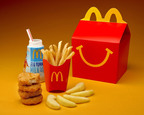
Last Tuesday McDonalds announced that they will be tweaking Happy Meals to make them more "healthy." Here's what they had to say:
The new Happy Meal will automatically include both produce (apple slices, a quarter cup or half serving) and a new smaller size French fries (1.1 ounces) along with the choice of a Hamburger, Cheeseburger or Chicken McNuggets, and choice of beverage, including new fat-free chocolate milk and 1% low fat white milk. For those customers who prefer a side choice of apples only, two bags of apple slices will be available, upon request.
Get that? The only real change they are making is that they will now be including apple slices (no doubt drenched in some chemical to keep them from turning brown). Notice that soda is still looks to be the default option, but you now have the choice of getting low-fat milk.
Yippee!!! Problem solved!! We can now all sleep easier because kids eating Happy Meals will now get some disgusting apple slices which they may or may not eat. That will more then make up for the excess trans fats, sodium and added sugars they will be consuming along with those apple slices.
Marion Nestle, as always, has some excellent commentary on the change on her blog. Marion points out that McDonald's move has less to do with actually being concerned with childhood obesity then business. Sales of Happy Meals are down because kids don't want the junk toys anymore.
It seems that marketing food as "healthy" is the newest way to increase sales these days, so what does McDonald's do? It makes some negligible improvement to an overall unhealthy pile of crap and calls it "healthy" (which is why you should never believe marketing).
If that ain't corporate whitewashing, I don't know what is. Do you really think that McDonald's would be adding apple slices to a Happy Meal if they didn't think there was money to be made?
Here's the deal, if you really want your kids to eat healthy, then don't ever take them to McDonald's. "Healthier" Happy Meals are certainly not the solution to the child-hood obesity epidemic in this country, particularly when they are not so much "healthier" but really just "slightly less unhealthy."
If McDonald's really wants to do right by kids and work to help end the child-hood obesity epidemic in this country there is actually one positive step they could take--they could stop their predatory marketing practices aimed at kids.
Instead of a "healthier" Happy Meal, let's get rid of the junky toys, the playgrounds and Ronald McDonald.
Tuesday, August 2, 2011
Why Can't We Get Good Apples????
Last week I journeyed up to Montreal to visit my cousin for a long weekend. It was wonderful spending some girl time with my "little" cousin (who is now 34) and touring the city from an "insiders" perspective.
Although we share the same continent, I always find that travelling to Quebec is like travelling to to Europe. I may have never stepped on a plane, but it feels like I did. Everything is so European from the language (French) to the restaurants, food stores, and bakeries.
One thing that really struck me, as it did when I travelled in Ireland last year, is how good the fruit is. Why is it in America that when you buy an apple, nine times out of ten it's inedible? Yet, in Montreal no matter where I bought apples they were delicious.
I really would like that mystery fully explained to me. I buy and eat plenty of apples in the Fall when they're local and fresh picked, but once January hits you pretty much can't find a decent apple.
Yet, last April in Ireland and last week in Montreal, every apple I ate was fabulous.
The other thing that struck me in Montreal, as it did in Ireland, was portion sizes. Restaurant portions were way smaller then they are here, and even pastries and bread products, such as croissants, muffins and bagels, were smaller. You didn't see the humongous portions and pastries on steroids you see here.
You can see the influence of fresh tasting fruit and smaller portions on the street. I didn't see one obese person the whole time I was there. I saw plenty of heavy people, but overall, they were much thinner.
Although we share the same continent, I always find that travelling to Quebec is like travelling to to Europe. I may have never stepped on a plane, but it feels like I did. Everything is so European from the language (French) to the restaurants, food stores, and bakeries.
One thing that really struck me, as it did when I travelled in Ireland last year, is how good the fruit is. Why is it in America that when you buy an apple, nine times out of ten it's inedible? Yet, in Montreal no matter where I bought apples they were delicious.
I really would like that mystery fully explained to me. I buy and eat plenty of apples in the Fall when they're local and fresh picked, but once January hits you pretty much can't find a decent apple.
Yet, last April in Ireland and last week in Montreal, every apple I ate was fabulous.
The other thing that struck me in Montreal, as it did in Ireland, was portion sizes. Restaurant portions were way smaller then they are here, and even pastries and bread products, such as croissants, muffins and bagels, were smaller. You didn't see the humongous portions and pastries on steroids you see here.
You can see the influence of fresh tasting fruit and smaller portions on the street. I didn't see one obese person the whole time I was there. I saw plenty of heavy people, but overall, they were much thinner.
Monday, August 1, 2011
Been Away, but I'm Ba-a-a-ack
Sorry for the silence, but I've been away. I promise to get cracking on new and interesting posts ASAP.
Wednesday, July 27, 2011
I Love Your Inner Thighs
Last night my husband told me "I love your inner thighs." I won't go into the details of how this comment came up (it's a little personal), but it surprised me none-the-less because in the 20-plus years that we've known each other he has never commented on my thighs.
My husband is a bit of a boob-dude, so most of his body compliments to me through the years have been directed to my breasts.
Being that I'm a 32D I've pretty much always had breast men attracted to me, and like most naturally endowed women I know, I've got the ass and thighs to go with the boobs.
I've always kind of figured that when men like breasts (the real ones that is), they've always pretty much know that they have to put up with the butt and thighs as being part of the bargain.
As I told a rather ample-bosomed friend of mine years ago who was complaining about her body, "you've got the kind of body women hate when it's theirs, but the kind that men just love" (and believe me, men went crazy for this girl because she was built like Christina Hendrickson).
Now my big ass has never really bothered me that much. Yeah, there have been times when I would've liked a smaller one, but ever since Jennifer Lopez glamorized big booties, I've begun to appreciated my curvy bottom.
But, my thighs, particularly my inner thighs, have always been the main focus on my liposuction fantasies.
Girls, I'm sure you know what I mean. Let's be real, I know I'm not the only woman in the world to stand in front of a full-length mirror and think "now if I could only get a little liposuction here. . . . "
I've been fantasizing about having my inner thighs liposuctioned for over 30 years now, because my inner thighs have always been one of my major "problem" areas whenever I gain weight. It's the first place the weight goes to, and the last place I seem to lose it from.
So that you know what I'm talking about here they are:

They're not exactly thunder-thighs, but they certainly don't look like Michelle Pfeiffer's either. BTW, that's a chair leg in my bathroom that appears to be hanging down between my legs (I never professed to be anything more than a rank amateur photographer).
So while I've spent most of my life loathing my thighs, it turns out that my husband has actually appreciated them.
It doesn't mean I'll give up on the lipo fantasy, but I guess I shouldn't be so critical of myself either.
My husband is a bit of a boob-dude, so most of his body compliments to me through the years have been directed to my breasts.
Being that I'm a 32D I've pretty much always had breast men attracted to me, and like most naturally endowed women I know, I've got the ass and thighs to go with the boobs.
I've always kind of figured that when men like breasts (the real ones that is), they've always pretty much know that they have to put up with the butt and thighs as being part of the bargain.
As I told a rather ample-bosomed friend of mine years ago who was complaining about her body, "you've got the kind of body women hate when it's theirs, but the kind that men just love" (and believe me, men went crazy for this girl because she was built like Christina Hendrickson).
Now my big ass has never really bothered me that much. Yeah, there have been times when I would've liked a smaller one, but ever since Jennifer Lopez glamorized big booties, I've begun to appreciated my curvy bottom.
But, my thighs, particularly my inner thighs, have always been the main focus on my liposuction fantasies.
Girls, I'm sure you know what I mean. Let's be real, I know I'm not the only woman in the world to stand in front of a full-length mirror and think "now if I could only get a little liposuction here. . . . "
I've been fantasizing about having my inner thighs liposuctioned for over 30 years now, because my inner thighs have always been one of my major "problem" areas whenever I gain weight. It's the first place the weight goes to, and the last place I seem to lose it from.
So that you know what I'm talking about here they are:

They're not exactly thunder-thighs, but they certainly don't look like Michelle Pfeiffer's either. BTW, that's a chair leg in my bathroom that appears to be hanging down between my legs (I never professed to be anything more than a rank amateur photographer).
So while I've spent most of my life loathing my thighs, it turns out that my husband has actually appreciated them.
It doesn't mean I'll give up on the lipo fantasy, but I guess I shouldn't be so critical of myself either.
Tuesday, July 26, 2011
We're being Manipulated
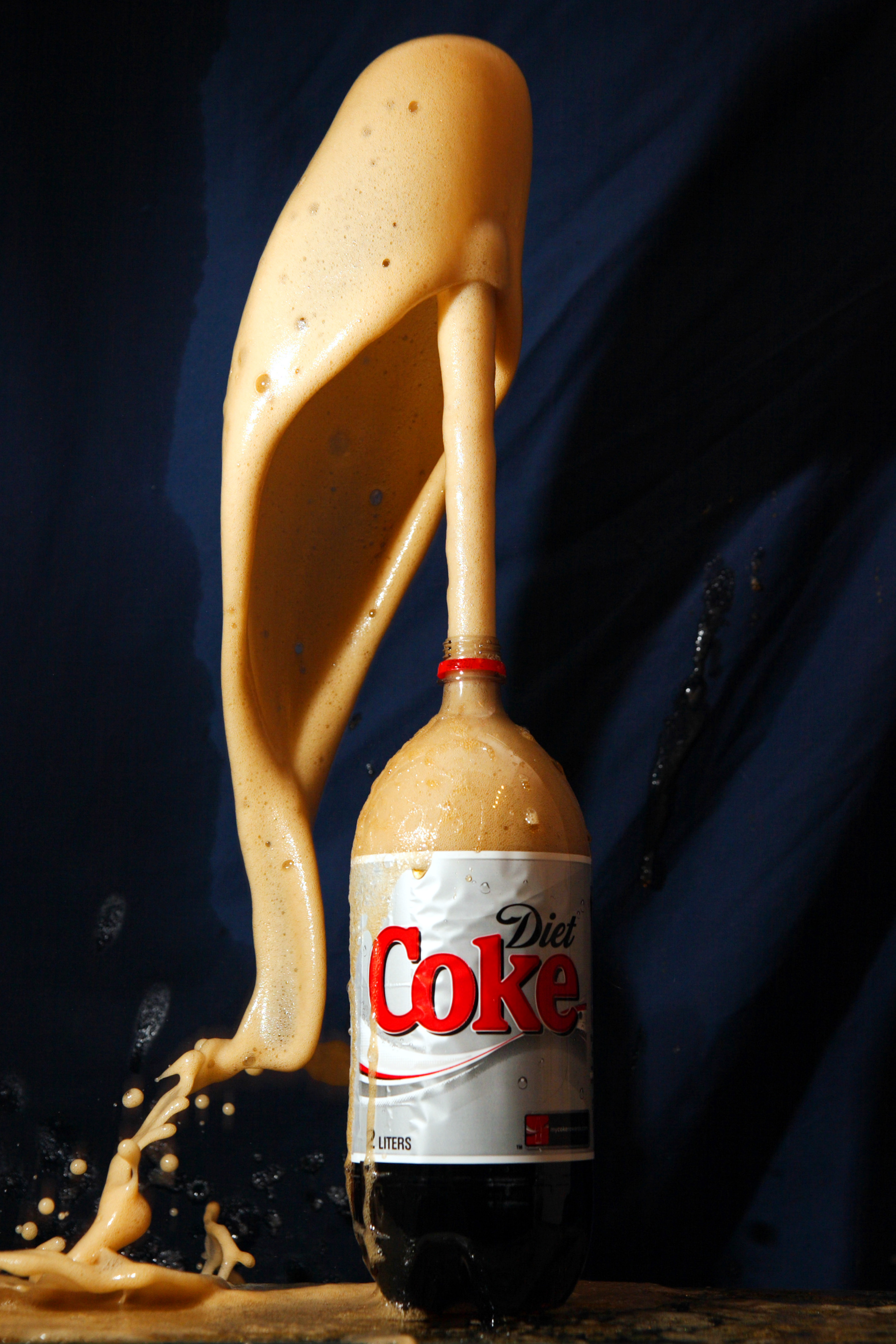
The bottom line, advertising and marketing gets us to buy stuff we don't need until we're in debt, as well as convincing us that products will do for us what we want them to do (even if they won't).
I've always preached that if a product is marketed that it will help you lose weight or be healthy, then the chances are it will actually do just the opposite..
Let's get real, if something actually will make you thin, it doesn't have to be marketed that way. You don't see the tag line "the skinny food!!" on a bag of carrots because no there's no need for it. But a bag of processed, chemical filled junk does need marketing to seduce you to buy it by appealing to your emotions and desires.
Don't fall for it.
Monday, July 25, 2011
I'll Believe it When I See It ---NOT!!!

Campbell's goes back on it's promise to reduce sodium in it's soups because they didn't sell. Marion Nestle has some good commentary on the turn around here. Quotable quote:
Make no mistake: food companies are not social service agencies. When it comes to a commitment to public health, the bottom line is all that counts—and has to be, given the way Wall Street works.
This is the reason why we can't depend on mass-produced food if we want to be thin or healthy. Mass-produced food has to appeal to the masses, and, unfortunately, the masses want food that is pretty much unhealthy and fattening.
Again, losing weight starts in the kitchen. If you want to lose weight, you have to take control of your own food.
Friday, July 22, 2011
Resting Metabolic Rate--Why Losing Weight after 45 is a Bitch
Following an exchange I had with a commentator in a previous post, I thought I should blog a little bit about Resting Metabolic Rate (RMR), and the closely related Basal Metabolic Rate or BMR. In a nutshell, it's the calories you burn at rest. Even if you stay in bed all day doing nothing, your body still burns calories.
Essentially, RMR and BMR are the base of calories you can eat in a day and not gain weight. They are the bottom line, if we do absolutely no moving in a day, amount of calories we can consume without gaining any weight.
Now, here's a sad fact, as we get older, RMR and BMR drops, i.e., the minimum calories we burn in a day decreases.
Let me explain. There are four factors that go into BMR and RMR calculations, your weight, your age, your gender and your height. You can find quite a few calculators on the web including here and here.
For example, I am a 5'2" 50 year-old, woman who weighs 130 pounds. My BMR is 1,276 calories and my RMR is 1,163 calories.
Now, take the same height and weight and sex but pretend I'm 20 years old-- my BMR is 1,416 calories a day and my RMR is 1,313 calories a day. That's approximately 150 calories fewer calories I can consume in a day, at rest and not gain weight.
What does this mean? It means if I do nothing to my regular diet and exercise program, I will gain weight as I get older for no other reason then I got older and my body just burns approximately 10% fewer calories on it's own.
Remember that it only takes 3,500 calories to gain a pound, so burning 150 fewer calories a day means a new pound gained every 24 days.
So, lesson number one in losing weight is that as we age we have to constantly adjust our daily calorie consumption lower JUST TO NOT GAIN WEIGHT.
Metabolism slow down is just one of those natural things about aging, you can't do anything about it (although we can take steps to not make it worse). The commentor is indeed correct that not moving as much as we age is also a factor in weight gain, but slowing metabolism as we age is a fact that we have to also deal with in confronting weight gain.
Additionally, while we're at it, I thought I should bring up the impact that weight loss has on RMR and BMR. Remember, WEIGHT is also factored into calculating both.
So, assume I weighed 160 pounds, not 130. At my current height and age, my BMR would be 1,406 and my RMR would be 1,299.
By dropping 30 pounds, my RMR goes down by 136 calories per day.
Lesson number two for the day--this is why you can never go back to your old eating habits. Once you drop weight, you actually burn fewer calories in a day, so you have to adjust your overall calorie consumption down to fit with your new weight. If you go back to your old eating habits, you'll go back to your old weight because that's where you'll reach caloric stasis again.
Third lesson, if you've hit a plateau in your weight loss, it means that because your calories in now equal calories out, you are not going to lose further weight until you further reduce calories and/or find new ways to burn more calories in a day.
Essentially, RMR and BMR are the base of calories you can eat in a day and not gain weight. They are the bottom line, if we do absolutely no moving in a day, amount of calories we can consume without gaining any weight.
Now, here's a sad fact, as we get older, RMR and BMR drops, i.e., the minimum calories we burn in a day decreases.
Let me explain. There are four factors that go into BMR and RMR calculations, your weight, your age, your gender and your height. You can find quite a few calculators on the web including here and here.
For example, I am a 5'2" 50 year-old, woman who weighs 130 pounds. My BMR is 1,276 calories and my RMR is 1,163 calories.
Now, take the same height and weight and sex but pretend I'm 20 years old-- my BMR is 1,416 calories a day and my RMR is 1,313 calories a day. That's approximately 150 calories fewer calories I can consume in a day, at rest and not gain weight.
What does this mean? It means if I do nothing to my regular diet and exercise program, I will gain weight as I get older for no other reason then I got older and my body just burns approximately 10% fewer calories on it's own.
Remember that it only takes 3,500 calories to gain a pound, so burning 150 fewer calories a day means a new pound gained every 24 days.
So, lesson number one in losing weight is that as we age we have to constantly adjust our daily calorie consumption lower JUST TO NOT GAIN WEIGHT.
Metabolism slow down is just one of those natural things about aging, you can't do anything about it (although we can take steps to not make it worse). The commentor is indeed correct that not moving as much as we age is also a factor in weight gain, but slowing metabolism as we age is a fact that we have to also deal with in confronting weight gain.
Additionally, while we're at it, I thought I should bring up the impact that weight loss has on RMR and BMR. Remember, WEIGHT is also factored into calculating both.
So, assume I weighed 160 pounds, not 130. At my current height and age, my BMR would be 1,406 and my RMR would be 1,299.
By dropping 30 pounds, my RMR goes down by 136 calories per day.
Lesson number two for the day--this is why you can never go back to your old eating habits. Once you drop weight, you actually burn fewer calories in a day, so you have to adjust your overall calorie consumption down to fit with your new weight. If you go back to your old eating habits, you'll go back to your old weight because that's where you'll reach caloric stasis again.
Third lesson, if you've hit a plateau in your weight loss, it means that because your calories in now equal calories out, you are not going to lose further weight until you further reduce calories and/or find new ways to burn more calories in a day.
Thursday, July 21, 2011
What You Eat Matters
There's a really interesting article in the New York Times about a study linking the kinds of food eaten to weight loss and gain.
Unfortunately, the lead of the article seems to imply that calories don't matter. If you read the article a bit more carefully, you would see that they do, because, the foods that lead to weight gain are high caloric and those that do not lead to weight gain are naturally less caloric.
So what foods lead to weight gain? According to the article:
As I indicated above, I think calories do matter. This study basically proves that if you eat high calorie foods, you'll eat more to feel sated, and gain weight. If you want to avoid gaining weight (or lose it) you need to fill up on low-calorie fruits and vegetables.
Period. End of story.
Unfortunately, the lead of the article seems to imply that calories don't matter. If you read the article a bit more carefully, you would see that they do, because, the foods that lead to weight gain are high caloric and those that do not lead to weight gain are naturally less caloric.
So what foods lead to weight gain? According to the article:
The foods that contributed to the greatest weight gain were not surprising. French fries led the list: Increased consumption of this food alone was linked to an average weight gain of 3.4 pounds in each four-year period. Other important contributors were potato chips (1.7 pounds), sugar-sweetened drinks (1 pound), red meats and processed meats (0.95 and 0.93 pound, respectively), other forms of potatoes (0.57 pound), sweets and desserts (0.41 pound), refined grains (0.39 pound), other fried foods (0.32 pound), 100-percent fruit juice (0.31 pound) and butter (0.3 pound).And the foods that lead to weight loss?
Also not too surprising were most of the foods that resulted in weight loss or no gain when consumed in greater amounts during the study: fruits, vegetables and whole grains. Compared with those who gained the most weight, participants in the Nurses’ Health Study who lost weight consumed 3.1 more servings of vegetables each dayAdditionally, the study said that dairy had a neutral effect on weight gain/loss and those who ate the most yogurt and nuts experienced the most weight loss. Also interesting was that metabolism slows with the consumption of refined grains, but stayed the same with the consumption of whole grains.
As I indicated above, I think calories do matter. This study basically proves that if you eat high calorie foods, you'll eat more to feel sated, and gain weight. If you want to avoid gaining weight (or lose it) you need to fill up on low-calorie fruits and vegetables.
Period. End of story.
Losing Weight is A Bitch
This morning I stepped on the scale and for the first time since the beginning of April I'm finally back under 130 pounds--129.8.
As I blogged here I managed to put on five pounds over the course of a month and a half. In the beginning of April I was 129 pounds, but by the end of May I was 134 pounds.
Five pounds for me is a full dress/pants size, so all my clothes were snug. I've learned from past experience that an extra five pounds, if not attended to, quickly turns into 10, and ten pounds is a hell of a lot harder to lose then five.
So, I rolled back my eating and amped up my exercise, and watched as the scale remained firmly at 134 pounds through the end of June. But, I've learned from the past not to let this discourage me. As I've explained before, when you're in weight gain mode, you're obviously eating too many calories, so your initial calorie cutback/more exercise efforts generally just stops the weight gain.
In other words, I was making progress because, although I wasn't losing weight, I wasn't gaining it as well.
So, after the July 4 weekend, I ramped up my efforts even more. I increased my raw food percentage to cut calories even further (eating raw fruits and vegetables generally fills you up while cutting calories), and starting juicing whenever I could.
The scale then started to move downward. Last week I was able to juice until dinner three days, and was even able to complete an entire day of juice fasting.
I lost 2 pounds last week--the most I've lost in a week since May when I started trying to lose weight again.
This week, thus far, I've juiced until dinner twice. Today I'm having a smoothie for breakfast but plan to juice for lunch and have a salad for dinner.
I've lost the weight I put on from the beginning of April, but I'm trying to get down to around 125 pounds which is really were I like to be.
I have to say that it has not been easy. Losing weight is definitely a bitch. It takes a lot of effort and you have to keep at it for a long time to see any results.
And, I'm applying lessons learned from past weight loss experience.
First, fast weight off, is fast weight on. Rather than launching into a huge, initial calorie cut-back, I rolled back calories gradually. If you initially cut back calories too fast, my body seems to revolt and then does anything it can to try to put that weight back on again.
Second, don't get discouraged by a stuck scale. If you're no longer gaining weight, you're moving in the right direction.
Third, don't let yourself get hungry. Cut calories, but don't let yourself get hungry.
Fourth, eat more raw fruits and vegetables. You'll reduce calories while filling yourself up.
Fifth, move more. Exercise is great, but sometimes is just all the extra moving that counts. Park farther away and walk, take that extra trip up the stairs instead of letting things pile up until you go up, take the stairs instead of the elevator.
As I blogged here I managed to put on five pounds over the course of a month and a half. In the beginning of April I was 129 pounds, but by the end of May I was 134 pounds.
Five pounds for me is a full dress/pants size, so all my clothes were snug. I've learned from past experience that an extra five pounds, if not attended to, quickly turns into 10, and ten pounds is a hell of a lot harder to lose then five.
So, I rolled back my eating and amped up my exercise, and watched as the scale remained firmly at 134 pounds through the end of June. But, I've learned from the past not to let this discourage me. As I've explained before, when you're in weight gain mode, you're obviously eating too many calories, so your initial calorie cutback/more exercise efforts generally just stops the weight gain.
In other words, I was making progress because, although I wasn't losing weight, I wasn't gaining it as well.
So, after the July 4 weekend, I ramped up my efforts even more. I increased my raw food percentage to cut calories even further (eating raw fruits and vegetables generally fills you up while cutting calories), and starting juicing whenever I could.
The scale then started to move downward. Last week I was able to juice until dinner three days, and was even able to complete an entire day of juice fasting.
I lost 2 pounds last week--the most I've lost in a week since May when I started trying to lose weight again.
This week, thus far, I've juiced until dinner twice. Today I'm having a smoothie for breakfast but plan to juice for lunch and have a salad for dinner.
I've lost the weight I put on from the beginning of April, but I'm trying to get down to around 125 pounds which is really were I like to be.
I have to say that it has not been easy. Losing weight is definitely a bitch. It takes a lot of effort and you have to keep at it for a long time to see any results.
And, I'm applying lessons learned from past weight loss experience.
First, fast weight off, is fast weight on. Rather than launching into a huge, initial calorie cut-back, I rolled back calories gradually. If you initially cut back calories too fast, my body seems to revolt and then does anything it can to try to put that weight back on again.
Second, don't get discouraged by a stuck scale. If you're no longer gaining weight, you're moving in the right direction.
Third, don't let yourself get hungry. Cut calories, but don't let yourself get hungry.
Fourth, eat more raw fruits and vegetables. You'll reduce calories while filling yourself up.
Fifth, move more. Exercise is great, but sometimes is just all the extra moving that counts. Park farther away and walk, take that extra trip up the stairs instead of letting things pile up until you go up, take the stairs instead of the elevator.
Wednesday, July 20, 2011
Personal Set-Backs Ctd.

Previously I posted as to how a shoulder injury was impacting my yoga practice. It's been rather frustrating for me since I can't practice any yoga asanas which put pressure on my shoulder including bakasana and chatturanga. I can't even practice something as basic as down-ward facing dog.
Well, I had an MRI done, and it showed no actual damage. What it did show, however, is a severe bursitis brought on by my bursa rubbing up against the inside of my shoulder bones. It seems that because of the structure of my shoulder, the cavity in which the bursa moves is very narrow, and because the bursa is now irritated and enlarged, the space is even narrower.
My doctor gave me a cortisone shot into the irritated bursa, and is recommending I continue to put absolutely no pressure on the shoulder until at least September, and then only gradually reintroduce asanas.
If that doesn't work, I may need surgery to widen the area in my shoulder in which the bursa moves.
Needless to say that while I'm pleased to have dodged surgery (for now), I'm not pleased that I have to continue with an abbreviated, abridged yoga practice for the next several months.
Tuesday, July 19, 2011
Out and About
Today I was out and about for most of the day, teaching yoga, going to a doctor's appointment, etc., and around noon, I was somewhat hungry.
Now, I've been juicing on and off for the last week and a half, so when I spotted a Robek's Franchise, I thought "perfect" and pulled in.
Now, for those of you unfamiliar with Robeks it's a franchise that specializes in fresh fruit juices and smoothies. There's a multitude of them around Fairfield county, and whenever I'm out and about and finding myself a bit peckish, I pull in for a refuel.
As I always do, I surveyed the menu board with some suspicion. They have all these smoothie concoctions which while I'm sure are probably delish (judging from the multitudes who buy them), are probably more calorie laden then I need (when are we finally going to get those calorie counts posted on menus?)
So, I ordered what I always order at Robeks, their "Green-V" which is nothing more then freshly squeezed carrot, spinach and celery juices (and comes in at 96 calories for 12 ounces according the the Robek's nutritional chart). Since I juiced for breakfast, that kept me on the juicing track for half a day thus far.
Now, I've been juicing on and off for the last week and a half, so when I spotted a Robek's Franchise, I thought "perfect" and pulled in.
Now, for those of you unfamiliar with Robeks it's a franchise that specializes in fresh fruit juices and smoothies. There's a multitude of them around Fairfield county, and whenever I'm out and about and finding myself a bit peckish, I pull in for a refuel.
As I always do, I surveyed the menu board with some suspicion. They have all these smoothie concoctions which while I'm sure are probably delish (judging from the multitudes who buy them), are probably more calorie laden then I need (when are we finally going to get those calorie counts posted on menus?)
So, I ordered what I always order at Robeks, their "Green-V" which is nothing more then freshly squeezed carrot, spinach and celery juices (and comes in at 96 calories for 12 ounces according the the Robek's nutritional chart). Since I juiced for breakfast, that kept me on the juicing track for half a day thus far.
Monday, July 18, 2011
Creamy Cauliflower Mac
The New York Times' Mark Bittman has this great recipe that sneaks cauliflower into a Mac and Cheese recipe.
I am always, always, always trying to find ways to get my daughter to eat vegetables--any vegetables, and the ONLY WAY I have succeeded thus far, is by stealth.
Let me tell you how bad my daughter is, not only will she not eat the vegetables, she used to throw tantrums if they even showed up on her plate (refusing to eat whatever else was on the plate because of the contamination). It took a long time to break her of that habit, but she will still remove the vegetables (quietly) from her plate if they show up. I guess the next step is getting her to leave the vegetables on her plate and then into her mouth.
So, stealth is the order of the day when it comes to getting her to eat her veggies, (I've discovered that boiled, then pureed veggies blend seamlessly into a wide variety of meals) so next time I see cauliflower at that farmer's market I'm picking some up to make Bittman's recipe.
BTW, what do you think about Kraft adding freeze-dried cauliflower powder into its macaroni and cheese? I'm not a big fan of Kraft, but I am thinking of possibly keeping some pureed cauliflower in the freezer to utilize whenever I make a boxed version of Macaroni and cheese for my daughter.
I am always, always, always trying to find ways to get my daughter to eat vegetables--any vegetables, and the ONLY WAY I have succeeded thus far, is by stealth.
Let me tell you how bad my daughter is, not only will she not eat the vegetables, she used to throw tantrums if they even showed up on her plate (refusing to eat whatever else was on the plate because of the contamination). It took a long time to break her of that habit, but she will still remove the vegetables (quietly) from her plate if they show up. I guess the next step is getting her to leave the vegetables on her plate and then into her mouth.
So, stealth is the order of the day when it comes to getting her to eat her veggies, (I've discovered that boiled, then pureed veggies blend seamlessly into a wide variety of meals) so next time I see cauliflower at that farmer's market I'm picking some up to make Bittman's recipe.
BTW, what do you think about Kraft adding freeze-dried cauliflower powder into its macaroni and cheese? I'm not a big fan of Kraft, but I am thinking of possibly keeping some pureed cauliflower in the freezer to utilize whenever I make a boxed version of Macaroni and cheese for my daughter.
Friday, July 15, 2011
Can A Feminist Diet?

Now, I've always considered myself a bit of a feminist, so I found the question intriguing. As the author notes, there are many in the feminist movement who view dieting as part of the "patriarchal bargain" i.e., an individual woman’s decision to accept gender rules that disadvantage women-as-a-group, in exchange for whatever power she can wrest from the system.
In other words, dieting is something that women do as individuals that in the end harms women as whole. Women, in this argument, are supposed to look good for men, so we diet to fit that gender rule and in the end hurt women as a whole.
She also discussed her ambivalence regarding dieting in light of her struggles with anorexia. In the end she decides to shun mirrors for a year, and revamp eating and exercise habits to a healthy moderation. She was going to judge her success by her behaviors.
Now I, of course, believe you can diet and still be a feminist. I've always thought the whole "patriarchal bargain" argument was rather weak. After all, wearing a bra is also supposed to be part of the patriarchal bargain (hence the burning), and I don't know about you, but I've always found that men prefer me with my bra off.
Now here's what I think. Dieting to lose weight to look good for others is bad. Dieting to be healthy and feel good about one's self is good.
Being fat is about more than just not being attractive to others. Eating the wrong foods and not moving and exercising enough can lead to serious health problems. In other words being fat is no different then smoking--it's extremely bad for your health (one of the reasons why I have a problem with the whole "Fat Acceptance" movement).
So, being a feminist and dieting are not incompatible if the goal in dieting is to be healthy.
BTW, I also believe that short term dieting is always the road to failure. You have to make life-long changes to your diet and exercise habits to lose weight and keep it off.
Thursday, July 14, 2011
Ahimsa Ctd.

Usually, when people first learn of ahimsa the tendency is to think it only applies in relation to others or animals, but the concept is much broader. First, you must practice non-violence to yourself, because any violence you inflict on yourself, causes suffering in others.
I bring this up today because the cousin I wrote about last September died late last night.
As I explained in my previous post, this cousin had a long history of doing some serious violence to herself. She had been bulimic, anorexic, and addicted to drugs, cigarettes and alcohol.
It was probably the weakening of her body from this self-inflicted violence which led to her developing lung cancer, which in turn led to her death at age 44.
Through the years I had seen the suffering caused in others around her by her eating disorders and addictions, but death is so much worse. Her mother, my Aunt, is my mother's sister. My aunt has just suffered a tragedy that no mother should have to live through--the death of a child. My mother naturally feels compassion for her sister's suffering, so she, in turn is suffering.
My cousin left behind two very young children who had to endure not only their mother's addictions, but her long illness and now the trauma of being left without a mother.
Our decisions as to what we eat affects more than our weight. It effects our health. Being overweight is more then just not liking the way you look in a mirror, it can lead to any number of afflictions that can shorten our lives, or, even worse, lead to us being incapacitated. Both would cause suffering in those around us who love us.
So, even if you never intend to practice yoga in the broader sense, at least think about practicing ahimsa -- do not let your eating habits cause violence to yourself.
Those around you will be happier for it.
From the "I'll Believe when I See it" Files
Fast Food Restaurant chains are promising to make their kids' menus healthier.
Wednesday, July 13, 2011
Keeping It all In Perspective

I preach that if you want to be thin, the absolute first step you have to take is eat healthy. After that you have to cut calories and exercise. There just isn't any other way to do it.
However, there is the point of taking "eating healthy" too far. Believe it or not, there's even a medical term for it called orhorexia nervosa.
Eating healthy means cleaning your own house up and getting the worst of the processed foods out of your diet. It means making better choices as to where you eat and what you choose to eat when you're not eating at home.
But, letting it take over your life to the point that some shrink thinks you qualify as having a mental illness on par with anorexia is probably taking it a bit too far.
You have to find balance.
Home is of course the perfect place to re-balance after a binge (and we all deserve a binge from time to time). It's easy to keep to a healthy eating regime at home if no other food options are available.
You won't eat potato chips or ice cream as a mid-night snack if there are none in the house to begin with. If you're truly hungry, and there's only fruit and nuts to snack on, then guess what? You'll eat fruit and nuts.
You also have more control over what goes into your meals if you stock a healthy pantry. If salad ingredients and a home made salad dressing are all available in your refrigerator, you're likely to eat a salad. If you have the ingredients to make smoothies for breakfast, you'll make smoothies.
I mention all this because I'm in the process of once again, cleaning up my diet and eating more raw foods. I go through this every summer as part of what's now become my annual eating regime.
As the days lengthen and fresh, local produce becomes available I start increasing the percentage of raw, uncooked fruits and vegetables that make up my diet over the course of the week. I'm probably eating 70-75% raw this week, by next week I may even push that up to 80-85% raw.
I'm also trying to reduce overall calories I'm eating daily to lose the "Winter weight" I inevitably seem to put on every year (and this year a little more so). I've been gradually replacing some meals with juices and smoothies, and will probably launch into a couple juice until dinner days by next week. That will likely lead to trying to fit an entire day of juice fasting at some point and then maybe a two day juice fast if I'm lucky.
I may even try a week of eating entirely raw to both detox and lose weight.
Now I've read about and know people who keep completely raw all year long. From my experience, I have to say that I see the benefits of eating raw both to my weight and to my overall well-being.
But, I prefer the more balanced approach. Eating as raw as I can all year round, with occasional all raw periods works best for me.
It also keeps me sane.
BTW, if you're interested in learning more about eating raw I recommend The Raw Food Detox Diet by Natalia Rose.
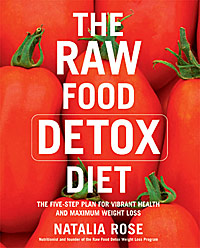
You can read about this book and order it here.
I don't agree with the "completely" raw philosophy (I also don't agree with the eating of processed "raw" food products or not combining fruits and vegetables), but I think Rose does an excellent job explaining the health benefits of eating raw as well as providing a sensible way to detox and go raw. Rose, like me, believes you have to make the changes gradually for them to stick.
Tuesday, July 12, 2011
Old Friends and New Juice Fasts

I've been perusing an old friend. Steve Meyerowitz's book Juice Fasting and Detoxification, was hugely inspiring to me on my weight loss journey, and I regularly refer back to it.
After I read this book, I bought my first juicer and started to juicing.
Since then, I've bought several other books on juice fasting, but Meyerwitz's book always seems to be the one I go back to.
I did, however, recently find a new website that has a lot of great information on detoxing and juice fasting. It's called "Greenlemonade" and you can find it here. It's a real good source of information if you just want to learn about juice fasting, or want to refresh your memory (something it seems I need to do more and more frequently as I age).
You can find good information on the basics of juice fasting here at the Greenlemonade website.. If you've never juice fasted before, or just want to learn a bit more about it, I recommend checking out some of the links including what to eat to prepare for a juice fast.
Now for my experience. I have to admit that I did not dive head first into juice fasting. I was more of a toe in the water kind of gal. I was so addicted to food and eating that I did not think it was possible for me to go even a day without eating.
I first experimented with just doing juice for breakfast or lunch, then breakfast and lunch and finally breakfast, lunch and dinner.
It turns out that I might have done myself a favor going it slow. If you leap into cleansing too fast, you can have some pretty ugly detoxing symptoms.
I also have to admit that I've never been able to do more than a three day juice fast. Not because I don't want to go longer, but with my life, it's a tough thing to do. You pretty much need a somewhat stress free period of time fast, and stress free periods don't come often around here.
In fact, when I have been able to accomplish my longer fasts it was because I started early, then headed up to the New Age Health spa to complete it. It's a wonderful spa in New York state with a fantastic juice fasting program. Generally, I'd prepare to fast the week before and actually start the fast on Thursday night. I head up to the spa Friday, fast until Sunday and then come home. While up there I relax (my husband takes the kids for the weekend), use the Sauna, have a colonic and come back feeling fantastic. I'd love to go up and stay longer (and fast longer), but that just isn't in the cards any time soon.
So, at home I'm generally only doing one or two day fasts.
I also like to just juice until dinner for up to a week at a time. I have juice for breakfast and lunch, then have a vegan (preferably as raw as possible) meal for dinner. This is also a fantastic way to ease yourself into more hard core juice fasting. I've also done fasts were I start out juicing until dinner then do a full scale juice fast for a day or two.
I'm writing about juice fasting now because it's Summer and hot as hell outside. I find that juice fasting (and reducing food consumption in general) is just easier when it's hot outside. I'm usually just to hot to feel hungry.
Time to start juice fasting.
Monday, July 11, 2011
Well Duh!!!
I always love it when studies are done to prove the obvious. Like this one which found that the rising rate of obesity among kids is due to poor eating and exercise habits and not genetics.
Friday, July 8, 2011
The Kid Quest--Trying New Stuff

That said, I do try to get them to eat at least marginally better. First, I limit the junk food they can have in the house, and when I do allow it I stick to the "better class of crap" philosophy. I.e., if they have to eat pre-packaged, boxed junk at least let it be organic pre-packaged, boxed junk. I don't think that Annie's Organic Mac N Cheese is all that much of an improvement over Kraft, but at least it is somewhat of an improvement.
That said, I am always trying to find ways for my kids to eat more fruits and vegetables. Particularly my daughter who regards anything that actually came off a tree or plant as inherently disgusting.
A couple of years ago I discovered that both kids will eat ice pops I make from fresh fruit juice. I run watermelon, strawberries, blueberries, etc. through my juicer, pour the juice into one of those little plastic Popsicle makers, let freeze and Viola I have a snack that both kids will eat with no artificial colors, sugar or flavors. I also make jello out of fresh fruit juice by adding unflavored gelatin.
Today I'm going to try something new. I'm going to make a vegetable snack for the kids. Last week I bought a food dehydrator, and have been trawling the Internet for recipe ideas. Yesterday I found a recipe for salt-and-vinegar "raw" potato chips. You toss thinly sliced potato wedges with oil, apple cider vinegar and salt then dehydrate them for 15-24 hours in the dehydrator.
If I can get the kids to eat this healthier version of potato chips, I've scored again.
Thursday, July 7, 2011
Psyching Myself Raw
I try to eat as raw vegan as possible throughout the year, but have to admit that mid-winter in cold, damp New England it's pretty hard. But, as we move back into summer with a huge abundance of local fruits and vegetables, I'm psyching myself up to get more raw again. I'm probably at about 50-60% raw/vegan for the week right now, and I'd like to get the percentage up to at least 85-90% or even 100%.
I've been trawling the Internet for inspiration as well as new recipes. I read this blog over at HuffPo. The lady lost 45 pounds in 6 months by going raw/vegan. That's pretty inspiring.
I also found some interesting recipes over at this blog and this blog.
And, best of all, last week I finally bought a food dehydrator that will let me experiment with a whole new range of raw food recipes.
Thus far I've only used my new dehydrator. to dry surplus herbs from my garden. I've got so much dry oregano, chives and tarragon at this point that I'm thinking giving away bottles of home-grown, home-dried herbs as Christmas presents this year. Usually, if I can't give away my excess herbs, they wind up on the compost pile.
But, while dried herbs are nice, I'm looking forward to making raw kale chips, and other raw food recipes.
I don't see myself as ever going completely raw/vegan, but I do know that whenever I up my "raw percentage" significantly or even just go completely raw/vegan for a while, the weight falls off.
So, here's to psyching myself raw!!
I've been trawling the Internet for inspiration as well as new recipes. I read this blog over at HuffPo. The lady lost 45 pounds in 6 months by going raw/vegan. That's pretty inspiring.
I also found some interesting recipes over at this blog and this blog.
And, best of all, last week I finally bought a food dehydrator that will let me experiment with a whole new range of raw food recipes.
Thus far I've only used my new dehydrator. to dry surplus herbs from my garden. I've got so much dry oregano, chives and tarragon at this point that I'm thinking giving away bottles of home-grown, home-dried herbs as Christmas presents this year. Usually, if I can't give away my excess herbs, they wind up on the compost pile.
But, while dried herbs are nice, I'm looking forward to making raw kale chips, and other raw food recipes.
I don't see myself as ever going completely raw/vegan, but I do know that whenever I up my "raw percentage" significantly or even just go completely raw/vegan for a while, the weight falls off.
So, here's to psyching myself raw!!
Wednesday, July 6, 2011
Going Meatless--It Ain't Easy
Since I had several comments regarding the difficulty in getting the men-folk in our lives to go meatless for even just a couple of meals a week, I thought I'd relate again how I did it.
First of all, it's kind of like quitting smoking. If you try to make them go cold turkey, you get a back-lash.
Instead, I recommend a slow and steady stealth approach. The first step is to just reduce the amount of meat in a meal and up the vegetables and other ingredients.
A typical family dinner in my house used to consist of pasta with 1 pound of sausage in it. First I reduced the sausage to 3/4 of a pound, adding more pasta and veggies, then 1/2 pound and now I often make it with 1/4 pound or no sausage at all.
If you're making a roast, meat-loaf, burgers, chili etc. do the same thing. If you originally started with 2 pounds of ground meat for the family burger night, reduce to 1 3/4 pounds and add more veggies, etc., then 1 1/2 pounds etc.
You can easily substitute more beans for meat in chili. Meat-loaf is great because you can hide a lot of veggies in it (great if you have difficult kids). I saute up a bunch of carrots, celery and onions, puree it well (if my daughter even suspects that a vegetable is present she won't eat it), then add it to the meat along with whole-wheat bread-crumbs.
Another trick is to add substances with "meat-like" textures. Filling up the void left by the meat with Portabello mushrooms in a pasta dish gives them the feel of meat without the negative health consequences. Same thing with beans. Tofu is also a good substitute, although I must admit that I'm not much of a tofu fan and don't cook with it myself.
I also like to make my "almost meat-less meals." These meals have meat but just a touch of it. Although it sounds counter-intuitive, bacon or pancetta is great for this. Saute just a wee bit of bacon in a pan, add some steamed green beans or asparagus and pasta, and the whole dish has a bacon flavor.
That's not to say that I didn't have difficulties, and some pretty big battles. I can't tell you some of the knock down, drag out fights I had over my husband over eating fish (which he doesn't regard as "meat.") But, by standing my ground in getting the whole family to eat better, I eventually won the war.
My husband last night ate a meal of Cod, with zucchini, tomatoes, red onions and brown rice with no complaints.
First of all, it's kind of like quitting smoking. If you try to make them go cold turkey, you get a back-lash.
Instead, I recommend a slow and steady stealth approach. The first step is to just reduce the amount of meat in a meal and up the vegetables and other ingredients.
A typical family dinner in my house used to consist of pasta with 1 pound of sausage in it. First I reduced the sausage to 3/4 of a pound, adding more pasta and veggies, then 1/2 pound and now I often make it with 1/4 pound or no sausage at all.
If you're making a roast, meat-loaf, burgers, chili etc. do the same thing. If you originally started with 2 pounds of ground meat for the family burger night, reduce to 1 3/4 pounds and add more veggies, etc., then 1 1/2 pounds etc.
You can easily substitute more beans for meat in chili. Meat-loaf is great because you can hide a lot of veggies in it (great if you have difficult kids). I saute up a bunch of carrots, celery and onions, puree it well (if my daughter even suspects that a vegetable is present she won't eat it), then add it to the meat along with whole-wheat bread-crumbs.
Another trick is to add substances with "meat-like" textures. Filling up the void left by the meat with Portabello mushrooms in a pasta dish gives them the feel of meat without the negative health consequences. Same thing with beans. Tofu is also a good substitute, although I must admit that I'm not much of a tofu fan and don't cook with it myself.
I also like to make my "almost meat-less meals." These meals have meat but just a touch of it. Although it sounds counter-intuitive, bacon or pancetta is great for this. Saute just a wee bit of bacon in a pan, add some steamed green beans or asparagus and pasta, and the whole dish has a bacon flavor.
That's not to say that I didn't have difficulties, and some pretty big battles. I can't tell you some of the knock down, drag out fights I had over my husband over eating fish (which he doesn't regard as "meat.") But, by standing my ground in getting the whole family to eat better, I eventually won the war.
My husband last night ate a meal of Cod, with zucchini, tomatoes, red onions and brown rice with no complaints.
Tuesday, July 5, 2011
Meatless Mondays.
I've chronicled previously about the intra-family meat discord in my home.
To recap, I was raised in a large Italian family and my Italian immigrant grandmother did most of the cooking. That meant that we eat mostly peasant food and meat was pretty much a rarity in our house. We'd maybe get a leg of lamb on Easter, and Sunday dinner always meant "meat sauce," but at least two or three meals a week didn't have meat, eggs or fish in them. Even when meat was served, it was more of a side-dish.
My husband, on the other hand, grew up in a wealthy Jewish family that was pretty Americanized. Meat was on the menu every night, and was usually the central focus of the meal.
As an example, this weekend my family spent the weekend at my in-laws beach-front home. In one meal, my mother-in-law served a) grilled loin of pork, 2) grilled rack of lamb and 3) a bread stuffed with sausage and pepperoni. The only reason there were any vegetables on the table was that I went to a local produce stand and bought the ingredients for a tomato salad and some local corn which we grilled.
Despite 20 years of trying to wean my husband off the meat, he still gives me a hard time any time a meal doesn't have meat in it. We're talking about a dude who eats meat at every meal he eats out. I'm talking breakfast, lunch and dinner.
I bring this up because Mark Bittman has written a pretty thoughtful piece on Meatless Mondays. In it, he points out that not only can humans get protein from vegetable sources, but that those who are not so "meat dependent" tend to be healthier.
He says:
After years of cooking to try to make my husband happy (and putting on a lot of weight in the process) I now try to go meatless 2 to three days a week. My husband isn't all that happy (although his doctor is), but I'm trying to do good for us and for the planet.
To recap, I was raised in a large Italian family and my Italian immigrant grandmother did most of the cooking. That meant that we eat mostly peasant food and meat was pretty much a rarity in our house. We'd maybe get a leg of lamb on Easter, and Sunday dinner always meant "meat sauce," but at least two or three meals a week didn't have meat, eggs or fish in them. Even when meat was served, it was more of a side-dish.
My husband, on the other hand, grew up in a wealthy Jewish family that was pretty Americanized. Meat was on the menu every night, and was usually the central focus of the meal.
As an example, this weekend my family spent the weekend at my in-laws beach-front home. In one meal, my mother-in-law served a) grilled loin of pork, 2) grilled rack of lamb and 3) a bread stuffed with sausage and pepperoni. The only reason there were any vegetables on the table was that I went to a local produce stand and bought the ingredients for a tomato salad and some local corn which we grilled.
Despite 20 years of trying to wean my husband off the meat, he still gives me a hard time any time a meal doesn't have meat in it. We're talking about a dude who eats meat at every meal he eats out. I'm talking breakfast, lunch and dinner.
I bring this up because Mark Bittman has written a pretty thoughtful piece on Meatless Mondays. In it, he points out that not only can humans get protein from vegetable sources, but that those who are not so "meat dependent" tend to be healthier.
He says:
T. Colin Campbell, author of “The China Study” (a long-term study linking animal-based diets to chronic disease), insists that our protein quota can be met very nicely by a whole food, plant-based diet, and that it’s when we exceed the recommended amount (usually by eating a disproportionate amount of animal-based foods) that we can begin to see adverse effects, like increased risk of heart and kidney diseases, cancer and osteoporosis. Campbell suggests that in the past century we’ve had such a reverence for protein that we’ve mindlessly focused on the idea that we need as much as we can get. Consequently, we consume too much, at least twice as much as we need, and most of that from animal products.Bittman also goes into a little Diet for a Small Planet spin and points out how our meat addiction is bad for the planet as well. (BTW, I read DFASP in college and it still has relevance today.)
After years of cooking to try to make my husband happy (and putting on a lot of weight in the process) I now try to go meatless 2 to three days a week. My husband isn't all that happy (although his doctor is), but I'm trying to do good for us and for the planet.
Saturday, July 2, 2011
Beach Daze
Sorry for not posting, but I'm actually at the Jersey shore for the long weekend. I'm been too busy taking long beach walks, reading, napping, cooking, etc. to blog.
Be back soon.
Be back soon.
Thursday, June 30, 2011
A Bike Named Simple
There is an absolutely fantastic piece in Salon by a guy who lost 100 pounds after he moved from the mid-west to New York. For anyone trying to lose weight, I highly recommend reading the whole story.
How did he lose 100 pounds in a year?
This man's story is truly inspirational. He even made room in his diet plan for eating pizza frequently.
And, when he hit a plateau, he just started exercising more and even more weight came off.
So, in the end, the story is the same. More exercise and healthier eating lead to significant weight loss.
And, he realizes these are permanent changes:
How did he lose 100 pounds in a year?
Back in the Midwest, where I lived my entire adult life, the most common question was, "How did you do it?" Some people asked with a wink and nod -- you know those vain coastal people and their shortcuts. No, I didn't have surgery, didn't take supplements, didn't hire a trainer or even buy a miracle-cure book.
I walked more, and I ate less.Another thing that helped (and something I've strenuously advocated for) where calorie counts on menus:
Part of my diet plan was simple necessity. Back home, I drove a car everywhere I went. I cherry-picked parking spots to get as close to the door as possible, shaving my walk to the minimum. But my normal daily walk in New York City was about three miles, just getting to school, walking to work either in Greenwich Village or Midtown and meeting my friends and wife for dinner.
At the same time, I cut back my eating. The first week in New York I went to Chipotle, something familiar from back home, and I was confronted with a menu that prominently listed each item's calories, posted by law thanks to a 2008 regulation championed by Mayor Mike Bloomberg. The truth was shocking. The tortilla alone was 290 calories, plus beans and rice added another 250 calories. That was 540 calories before I even made a real choice. For my favorite burrito -- chicken with corn salsa and guacamole -- the grand total was about 960 calories. Here I was making "healthy choices" at Chipotle, and I'd blown nearly half a day's suggested calories.Just as I always argued, knowledge is key if you want to lose weight.
This man's story is truly inspirational. He even made room in his diet plan for eating pizza frequently.
And, when he hit a plateau, he just started exercising more and even more weight came off.
So, in the end, the story is the same. More exercise and healthier eating lead to significant weight loss.
And, he realizes these are permanent changes:
There is still a fat person inside of me, and keeping the weight off has not always been as easy. After hitting my goal, I gained 10 pounds back quickly and I realized I had to stay disciplined. I had to change my habits forever, not just for one year. Now I count my calories and weigh myself daily.
Wednesday, June 29, 2011
Your Diet Coke Problem is a Problem to Your Waist-line

If you think you're doing your waistline any favors by drinking a chemically-brewed, sugar free soda concoction your just plain out-right wrong. A couple of new studies found that people who drink diet sodas had bigger waists and were more likely to have diabetes then those who did not.
After completing a two decades long study epidemiologists from the School of Medicine at The University of Texas Health Science Center San Antonio reported data showing that diet soft drink consumption is associated with increased waist circumference in humans,
A second study that found aspartame raised fasting glucose (blood sugar) in diabetes-prone mice.
Quotable quote:
"Data from this and other prospective studies suggest that the promotion of diet sodas and artificial sweeteners as healthy alternatives may be ill-advised," said Helen P. Hazuda, Ph.D., professor and chief of the Division of Clinical Epidemiology in the School of Medicine. "They may be free of calories but not of consequences."
The statistics are mind boggling. The study showed that diet soft drink users, as a group, experienced 70 percent greater increases in waist circumference compared with non-users. Frequent users, who consumed two or more diet sodas a day, experienced waist circumference increases that were 500 percent greater than those of non-users.
So the science is clear. If you want a slim waist ditch the diet coke.
Tuesday, June 28, 2011
It's the Calories Dummy
A new study once again bursts the bubble concerning lower-calorie foods.
It turns out that we respond to calories in food more than taste. That's why when we eat low calorie versions of foods, we're not as satisfied. In a nutshell:
Your body isn't fooled by some low calorie pseudo-food. It wants the real thing, and so will respond by just eating more of whatever plasticized, aerated junk you're eating. In the end you wind up eating more calories then if you just went and how the real stuff to begin with.
The way to cut calories and lose weight (and maintain it once you've lost it) isn't to eat reduced calorie anything. The key to weight loss and maintenance is PORTION CONTROL.
Michael Pollan in his Food Rules exhorts to eat less, but eat better. The reality is, that once you get used to it, you really only need to eat a lot less then what you've grown accustomed to eat. We're so used to humongous, steroid-sized portions of food, that we've forgotten that we can actually survive all morning on what is now called a "mini" bagel.
The trick I found, was to gradually reduce portions so that my "new" normal is almost half the size of what I previously ate. Trying to reduce "cold turkey" didn't work because my body was used to the bigger portions and I was too hungry between meals. By gradually reducing porions, however, I adjusted with little discomfort.
So now when I want dessert (and because I have a sweet tooth, I frequently do), I can limit myself to one, really good cookie, or one scoop of really good ice cream. I take my time to eat my indulgence, and afterwards I'm completely satisfied.
It turns out that we respond to calories in food more than taste. That's why when we eat low calorie versions of foods, we're not as satisfied. In a nutshell:
We are so convinced that the tongue is the source of culinary joy — we eat too much ice cream because we want to make our mouth happy — but it’s not. Instead, we eat calorically dense foods because we are also trying to pleasure this secondary pathway, which responds not to the nuances of flavor but to the brute intake of energy. (On a more depressing note, this research also explains why the obesity epidemic is so hard to fix. Let’s imagine, for instance, that some genius invented a reduced calorie bacon product that tasted exactly like bacon, except it had 50 percent fewer calories. It would obviously be a great day for civilization. But this research suggests that such a pseudo-bacon product, even though it tasted identical to real bacon, would actually give us much less pleasure. Why? Because it made us less fat. Because energy is inherently delicious. Because we are programmed to enjoy calories.)I've blogged about this before. The reality is that if you want ice cream, you're better off eating a small bowl of real ice cream (and the absolute, best, creamiest, most natural stuff you can find), then eating a lot of some reduced calorie pseudo ice cream crap.
Your body isn't fooled by some low calorie pseudo-food. It wants the real thing, and so will respond by just eating more of whatever plasticized, aerated junk you're eating. In the end you wind up eating more calories then if you just went and how the real stuff to begin with.
The way to cut calories and lose weight (and maintain it once you've lost it) isn't to eat reduced calorie anything. The key to weight loss and maintenance is PORTION CONTROL.
Michael Pollan in his Food Rules exhorts to eat less, but eat better. The reality is, that once you get used to it, you really only need to eat a lot less then what you've grown accustomed to eat. We're so used to humongous, steroid-sized portions of food, that we've forgotten that we can actually survive all morning on what is now called a "mini" bagel.
The trick I found, was to gradually reduce portions so that my "new" normal is almost half the size of what I previously ate. Trying to reduce "cold turkey" didn't work because my body was used to the bigger portions and I was too hungry between meals. By gradually reducing porions, however, I adjusted with little discomfort.
So now when I want dessert (and because I have a sweet tooth, I frequently do), I can limit myself to one, really good cookie, or one scoop of really good ice cream. I take my time to eat my indulgence, and afterwards I'm completely satisfied.
Monday, June 27, 2011
Personal Set-backs
My shoulder has been acting up again. That means I've been unable to do many of my favorite asanas when I practice yoga, including Bakasana.
If you're unfamiliar with yoga, this is bakasana:

This asana is one of the first "I can't believe I'm actually doing this" asanas I achieved after I started practicing Ashtanga yoga.
If any of you have ever practiced yoga at a "serious" shala you know what I mean. You start by taking your first yoga class and you can't even touch your toes, then you look over in the room and there are yogis doing hand stands or putting their feet behind their heads. You look over at these contortionists and think "yeah, I'll never be doing that."
But, then you start practicing yoga regularly and before you know it you're standing on your head without leaning against the wall, and you can get your head down to your leg as you reach down and grab your feet. Lotus comes naturally after a couple years of regular practice.
You become amazed at what you accomplished, all the more so if, like me, you never started practicing yoga until well into your 40's.
Bakasana is actually not that hard to do once you've built up some upper body and core strength (from all those chattarungas) and you practice it. You simply place your knees onto your forearms, lift your head as a counter-balance, lean forward, and look out over the abyss.
The first time I was actually able to balance in bakasana I knew I could conquer just about anything yoga had to throw at me. I was so excited the day I first flew, that when my husband came home I had to demonstrate.
Before I knew it, the time I could remain in bakasana lengthened. Eventually I was able to lift myself up and kick out my feet to land squarely in chatturanga. Then I learned to move from bakasana to tripod headstand then back to bakasana and out to chatturanga.
I've always loved practicing bakasana. It's such an amazing freeing feeling to be up there, balancing my legs on my forearms, flying but for the tenous connection between the floor and my hands. When I'm in bakasana I feel that I can still do just about anything with my body now that I'm 50. I feel that age is no hinderance to anything I want to accomplish.
But for the past few weeks I can't practice bakasana because it's causing too much pain. This has happened periodically for the last few years. My shoulder hurts, I pull back on practice, it feels better, then all of a sudden the shoulder acts up again and I have to pull back. It's frustrating to come so far, only to be stopped because my body is not co-operating.
My shoulder has been an off and on problem for close to two years now. I don't know how I hurt it. There was no "ouch" moment when I suddenly realized that I hurt myself. It was a gradual pain that slowly got worse.
I've sought medical attention for it, and have been on anti-inflamatories, got physical therapy, etc. The pain subsides for a while, allowing me to go back to a full yoga practice, and get on with my life, but then the pain usually roars back to life again.
Last week I saw my orthopaedist again, and he's ordering an MRI.
The shoulder has, of course, been affecting other parts of my yoga practice beyond bakasana. Chatturangas hurt, so I've had to modify my sun salutations. I can't go all the way up in back-bends because I don't want to put pressure on my shoulder, etc.
It's affecting my life as well. Carrying in groceries has become painful because of my shoulder, When I'm working with my athletes for Special Olympics skiing, I often have to pull someone along, with great pain to myself. Sometimes just the weather makes it act up. I find myself taking Motrin or Advil for my shoulder every time it's damp and cold out.
My orthopaedist thinks I may need surgery. For a working mother, fitting surgery into my life is, of course, difficult.
But then I think about flying in bakasana and how much I want to be able to feel that freedom without the fear of feeling pain afterwards.
So, if the doctor says surgery is the answer, then surgery it will be.
Personal set-backs are always demoralizing and it's easy to lose focus and want to quit just because you can't progress the way you want. I've known plenty of yogis who stop practicing just because they're injured. They take sort of an all or nothing approach to the practice.
But I like to look at injuries as opporunities. Sometimes when we can't do something, it opens up our awareness to other things we may not have noticed previously. When I'm not injured, I'm so focused on pushing up to a full back-bend and remaining there, I often forget that the true purpose of a back-bend is to arch the back and stretch out all the muscles in the front of the body. By pulling back and not going all the way up, I can actually got deeper into the pose then I would otherwise.
If you're unfamiliar with yoga, this is bakasana:

This asana is one of the first "I can't believe I'm actually doing this" asanas I achieved after I started practicing Ashtanga yoga.
If any of you have ever practiced yoga at a "serious" shala you know what I mean. You start by taking your first yoga class and you can't even touch your toes, then you look over in the room and there are yogis doing hand stands or putting their feet behind their heads. You look over at these contortionists and think "yeah, I'll never be doing that."
But, then you start practicing yoga regularly and before you know it you're standing on your head without leaning against the wall, and you can get your head down to your leg as you reach down and grab your feet. Lotus comes naturally after a couple years of regular practice.
You become amazed at what you accomplished, all the more so if, like me, you never started practicing yoga until well into your 40's.
Bakasana is actually not that hard to do once you've built up some upper body and core strength (from all those chattarungas) and you practice it. You simply place your knees onto your forearms, lift your head as a counter-balance, lean forward, and look out over the abyss.
The first time I was actually able to balance in bakasana I knew I could conquer just about anything yoga had to throw at me. I was so excited the day I first flew, that when my husband came home I had to demonstrate.
Before I knew it, the time I could remain in bakasana lengthened. Eventually I was able to lift myself up and kick out my feet to land squarely in chatturanga. Then I learned to move from bakasana to tripod headstand then back to bakasana and out to chatturanga.
I've always loved practicing bakasana. It's such an amazing freeing feeling to be up there, balancing my legs on my forearms, flying but for the tenous connection between the floor and my hands. When I'm in bakasana I feel that I can still do just about anything with my body now that I'm 50. I feel that age is no hinderance to anything I want to accomplish.
But for the past few weeks I can't practice bakasana because it's causing too much pain. This has happened periodically for the last few years. My shoulder hurts, I pull back on practice, it feels better, then all of a sudden the shoulder acts up again and I have to pull back. It's frustrating to come so far, only to be stopped because my body is not co-operating.
My shoulder has been an off and on problem for close to two years now. I don't know how I hurt it. There was no "ouch" moment when I suddenly realized that I hurt myself. It was a gradual pain that slowly got worse.
I've sought medical attention for it, and have been on anti-inflamatories, got physical therapy, etc. The pain subsides for a while, allowing me to go back to a full yoga practice, and get on with my life, but then the pain usually roars back to life again.
Last week I saw my orthopaedist again, and he's ordering an MRI.
The shoulder has, of course, been affecting other parts of my yoga practice beyond bakasana. Chatturangas hurt, so I've had to modify my sun salutations. I can't go all the way up in back-bends because I don't want to put pressure on my shoulder, etc.
It's affecting my life as well. Carrying in groceries has become painful because of my shoulder, When I'm working with my athletes for Special Olympics skiing, I often have to pull someone along, with great pain to myself. Sometimes just the weather makes it act up. I find myself taking Motrin or Advil for my shoulder every time it's damp and cold out.
My orthopaedist thinks I may need surgery. For a working mother, fitting surgery into my life is, of course, difficult.
But then I think about flying in bakasana and how much I want to be able to feel that freedom without the fear of feeling pain afterwards.
So, if the doctor says surgery is the answer, then surgery it will be.
Personal set-backs are always demoralizing and it's easy to lose focus and want to quit just because you can't progress the way you want. I've known plenty of yogis who stop practicing just because they're injured. They take sort of an all or nothing approach to the practice.
But I like to look at injuries as opporunities. Sometimes when we can't do something, it opens up our awareness to other things we may not have noticed previously. When I'm not injured, I'm so focused on pushing up to a full back-bend and remaining there, I often forget that the true purpose of a back-bend is to arch the back and stretch out all the muscles in the front of the body. By pulling back and not going all the way up, I can actually got deeper into the pose then I would otherwise.
Friday, June 24, 2011
Fat Ronald
You know, if McDonalds is going to continue to use Ronald McDonald as a spokesperson, then I think they should update him to this:

After all, this image, by Ron English, better represents what McDonalds' food is all about. Maybe there should be public service announcements with with Fat Ronald eating a Whopper and saying "eat this, and you could look like me."
Frankly, I never saw the appeal of McDonalds food. I can honestly say that I haven't eaten in one since I was a teen-ager. I just never liked the food (one of the benefits to being a picky eater.) I'd go with my friends and just sit there sipping a diet soda (bad habit, I know, but I eventually broke that one).
As an adult, I've driven a hard line with my kids. I've never taken them to eat in a McDonalds (or Burger King), and although they've gone on occasion with friends or sitters, they know better than to ask me or their Dad to take them there.
The funny thing about not taking your kids to McDonalds is that there are a lot of people who seem to feel that its somewhat akin to child abuse.
I've had numerous discussions with people who try to impress on me that I am somehow denying my children some kind of fundamental aspect of kid-dom by not hauling them to McDonalds and teaching them to eat grease-laden, sodium-drenched food remnants.
Believe me they've had happy and content child-hoods despite the lack of Happy Meals (and don't get me started on those land-fill filling toys--how many billions of years will that Spider-man action figure be sitting in a landfill?).
Besides, what of the billions of children who grew up before McDonalds existed? Did they somehow or another have unfulfilled childhoods? McDonalds actually never came to my town until I was a teen-ager, so does that mean that all the kids growing up in Suburban New Jersey in the 1960's were deprived?
I've always preached that if you want to lose weight and keep it off, then you need to bring your whole family along in the journey.
No man is an island, and if you want to eat healthy, unprocessed nutritious food, your whole family has to eat that way. You can't eat healthy if you have a kitchenful of Cheetos, Doritos, Chips-a-Hoy and Lunchables--even if it's "just for the kids."
You know what?? Not only should you not be eating that crap, your kids shouldn't be either.
And, restaurant options can't include anything with a drive-thru window.
After all, this image, by Ron English, better represents what McDonalds' food is all about. Maybe there should be public service announcements with with Fat Ronald eating a Whopper and saying "eat this, and you could look like me."
Frankly, I never saw the appeal of McDonalds food. I can honestly say that I haven't eaten in one since I was a teen-ager. I just never liked the food (one of the benefits to being a picky eater.) I'd go with my friends and just sit there sipping a diet soda (bad habit, I know, but I eventually broke that one).
As an adult, I've driven a hard line with my kids. I've never taken them to eat in a McDonalds (or Burger King), and although they've gone on occasion with friends or sitters, they know better than to ask me or their Dad to take them there.
The funny thing about not taking your kids to McDonalds is that there are a lot of people who seem to feel that its somewhat akin to child abuse.
I've had numerous discussions with people who try to impress on me that I am somehow denying my children some kind of fundamental aspect of kid-dom by not hauling them to McDonalds and teaching them to eat grease-laden, sodium-drenched food remnants.
Believe me they've had happy and content child-hoods despite the lack of Happy Meals (and don't get me started on those land-fill filling toys--how many billions of years will that Spider-man action figure be sitting in a landfill?).
Besides, what of the billions of children who grew up before McDonalds existed? Did they somehow or another have unfulfilled childhoods? McDonalds actually never came to my town until I was a teen-ager, so does that mean that all the kids growing up in Suburban New Jersey in the 1960's were deprived?
I've always preached that if you want to lose weight and keep it off, then you need to bring your whole family along in the journey.
No man is an island, and if you want to eat healthy, unprocessed nutritious food, your whole family has to eat that way. You can't eat healthy if you have a kitchenful of Cheetos, Doritos, Chips-a-Hoy and Lunchables--even if it's "just for the kids."
You know what?? Not only should you not be eating that crap, your kids shouldn't be either.
And, restaurant options can't include anything with a drive-thru window.
Thursday, June 23, 2011
Science for Sale
Big tobacco was able to muddy the scientific waters for years by hiring scientists to produce "data" to obfuscate the truth regarding the dangers of cigarette smoking and second hand smoke.
The technique worked so well (by delaying the inevitable), that it was quickly picked up by Big oil to cloud the truth about climate change.
Now, with the increasing awareness of the negative health effects of obesity, we have a new industry willing to find sciencists to obfuscate. Big Sugar has now become the Sugar Daddy of any scientist willing to say that their products won't make you fat.
In a nutshell, a scientist who has taken money from Kraft, McDonald's, General Mills, Kellogg's, Mars and Nabisco, is now taking a position entirely contrary from every other "honest" (i.e., non-purchased) scientist that soda is a major contributor to the obesity epidemic in the US. Kind of like what Big Tobacco and Big Oil's scientists did, this guy is claiming that there is no "clear evidence."
Here's what they do:
The technique worked so well (by delaying the inevitable), that it was quickly picked up by Big oil to cloud the truth about climate change.
Now, with the increasing awareness of the negative health effects of obesity, we have a new industry willing to find sciencists to obfuscate. Big Sugar has now become the Sugar Daddy of any scientist willing to say that their products won't make you fat.
In a nutshell, a scientist who has taken money from Kraft, McDonald's, General Mills, Kellogg's, Mars and Nabisco, is now taking a position entirely contrary from every other "honest" (i.e., non-purchased) scientist that soda is a major contributor to the obesity epidemic in the US. Kind of like what Big Tobacco and Big Oil's scientists did, this guy is claiming that there is no "clear evidence."
Here's what they do:
In a recent commentary in the Journal of the American Medical Association, respected food researchers asserted that the industry has participated in "deceptive science and advocacy." They say "the food and beverage industry has created or funded front groups reminiscent of the tobacco institute that give the appearance of grassroots support."In a way, I can't blame Big companies for doing this. After all, they have businesses to run. But I do blame the "scientists" and organizations that take their money. It's plainly obvious that the scientific community needs higher ethical standards, and needs to enforce those standards stringently.
The groups, they say, include Americans Against Food Taxes and the Center for Consumer Freedom, organizations that are largely funded by the food and beverage industries.
"Big tobacco, big sugar," food researcher Popkin said, "identical in the way they treat scientists."
Popkin admits he has taken some industry money for research but, he says, turned down many of big food's most tantalizing offers.
"I've been offered $5,000 to go speak to this meeting or that meeting," he said. "You get $2,000 to $5,000 a day. They'll fly you on business class tickets to exotic places. They'll take you to Paris or Rio. They'll take you to places in Brazil."
The Children's Hospital of Philadelphia was criticized for taking $10 million for obesity research from the soda industry, and after the American Association of Family Physicians took money from Coca-Cola, some members ripped up their membership cards.
Wednesday, June 22, 2011
Selfish Giving Part Deux
Doing good while doing yourself bad. Sometimes you just got to see it to believe it:
Give blood and you can get a Whopper to clog your arteries:
How about saving the planet, but polluting yourself?
What the cluck??? KFC offers buckets of chicken to help raise funds for Breast Cancer research?

And, how about Coco-Cola sponsoring continuing education courses for dieticians on, of all things, bone health?
If you want to read a good argument as to why not for profit organizations shouldn't take money from soda manufacturers, read it here.
Stephen Colbert, of course, has something to say on the matter.
Give blood and you can get a Whopper to clog your arteries:
How about saving the planet, but polluting yourself?
What the cluck??? KFC offers buckets of chicken to help raise funds for Breast Cancer research?
And, how about Coco-Cola sponsoring continuing education courses for dieticians on, of all things, bone health?
If you want to read a good argument as to why not for profit organizations shouldn't take money from soda manufacturers, read it here.
Stephen Colbert, of course, has something to say on the matter.
Subscribe to:
Posts (Atom)