An interesting study showing that those who slept more burned more fat than muscle on diets, while those who slept less burned more muscle than fat. Read it here: http://www.huffingtonpost.com/2010/10/05/dieting-more-sleep-helps-_n_751429.html
Of course, knowing that extra sleep is helpful in losing fat and actually getting that extra hour of sleep are two completely different things. As someone who regularly rises at 5:30 am, I for one would love to get an extra hour or two of sleep a night. Hell, I would just like to be able to roll around in bed for fifteen or twenty minutes after waking up.
When you work, have kids, own a home and want to be able to fit in exercise into your schedule, however, getting enough sleep is tough. I do try to stay in bed as long as I can on the weekends, and it's not unusual for me to sometimes get to bed fairly early in the evenings when I can. I've also been known to take a nap mid-afternoon before the kids get home from school. Despite all that, however, I often find myself walking around in a state of perpetual tiredness, just looking for an opportunity to find a little time to get some sleep.
I don't think my situation is not all that unusual. Sleep has somewhat been de-prioritized in the last couple decades. With TV, computers etc, we all have far too many distractions to keep us up. Hell, we tend to get mocked (as I do), if you actually go to bed before 10 pm from time to time.
But, I do think we do need to prioritize sleep. Staying up to 11 pm to watch the latest episode Mad Men is not a really good idea if it cuts into your sleep time. I solved this issue myself by getting a DVR and record shows that are on late at night. What's more, the DVR is on the TV in front of my treadmill, so if I want to watch Mad Men then I have to get on the treadmill to do so.
And, instead of playing around on the computer when you have some time to kill mid-day, maybe it would be better to take a nap. I know I'm going to be thinking about taking more naps now that I've read about this study.
The truth is I always feel guilty about taking naps, even being somewhat embarrassed to admit that I do so. Napping, like wide shouldered suits, is something that just seems so unfashionable. People don't nap anymore, just like they prefer to stay awake late watching TV.
Maybe we should all get in the habit of taking more naps and going to bed a little earlier.
Apparently, it would be good for our BMIs.
Friday, October 8, 2010


Thursday, October 7, 2010
First Tinkie Winkie, Now Yoga.

I've heard this before, but thought I'd muse about it a little bit here after I read this piece on how Christian leaders object to the practice of yoga: http://www.huffingtonpost.com/2010/10/07/albert-mohler-southern-ba_n_753797.html.
As a yoga practitioner I have to admit that I'm not all that much into the whole Hindu/Buddhist undertones that many practices take on, but that's because I'm just an extremely non-religious person in general. After spending most of my childhood in church and Catholic schools, I tend to run in the opposite direction of anything that is remotely religious.
The bottom line is, however, that despite misconceptions, yoga is not in any way a religious practice.
Yoga is considered a science in India, and, in fact, I've been told that many of the gurus in India actually frown on their Western students "converting" to Hinduism or Buddhism. Gurus will tell you that you can practice yoga no matter what religion you are or even if you are an agnostic or atheist because yoga has nothing to do with religion.
The yoga/eastern religion connection most likely got mixed up here in the west because early western devotees to yoga adopted aspects of eastern religions or converted because their gurus were Hindu or Buddhist.
So, when I hear Christian leaders' objections to yoga, I know that the objections stem from nothing more than just pure ignorance. After all, it was just a few years ago that the Teletubbies were being accused of promoting the gay lifestyle by this same crowd.
On the other hand, yoga is not just a physical work-out (although it can be). The physical aspect of yoga, the asanas, are just one of the eight limbs of yoga. When you look at the other seven limbs, however, even those do not demand adherence to a particular religion. Meditation is not a religious practice, although you can meditate on a higher being. Chanting is also not a religious practice, nor is pranayama (breath work).
Yogis are supposed to follow a code of ethics, the yamas and niyamas, but even those have no reference to any gods.
So I think before Pat Robertson objects to yoga because it's "spooky" he should really put the research into finding out what the chanting is all about.
After all, there are many people in this country who could benefit from yoga. It would be a shame if they feared walking into a yoga studio just because they thought it would compromise their Christian faith.
Tuesday, October 5, 2010
Are GMO foods More Allergenic?
As if there wasn't reason enough to avoid genetically modified foods. There's evidence they're more prone to cause allergic reactions. Read it here: http://motherjones.com/blue-marble/2010/09/genetically-engineered-salmon-allergies
Here's the nut of it:
Here's the nut of it:
In order to understand the allergy tests, a bit of backstory on how AquAdvantage salmon are made is necessary. First, genetic engineers create a "diploid" fish, meaning like people, it has two sets of chromosomes. Then, to make the final market product, they add genetic material from other fish and breed a new salmon with three sets of chromosomes—a "triploid" female that can't reproduce. AquaBounty researchers compared the allergenicity—or potential to cause an allergic reaction—of a control group of salmon to both the genetically engineered diploids and triploids. They found (PDF, see page 102) that the diploid salmon were 40 percent more allergenic than the control, while the triploid group was 19 percent more allergenic.
AquaBounty says that the triploids' allergenicity level wasn't statistically significant, and although the diploids' level is significant, it doesn't matter because only triploids will be sold. But Hansen of the Consumers Union finds a few problems with this argument. For starters, the test wasn't double blind, meaning the researchers knew which fish were part of which test group. Second, the sample size of triploid fish was tiny—only six fish in all. Third, although AquaBounty is going to try to turn all its market-bound fish into triploid sterile females, the process isn't perfect, and some 5 percent could end up as the more allergenic diploid. Especially scary when you consider that unlike the triploids, the diploids aren't sterile. So if they escaped, they could breed with wild salmon.
Do You Really Want to Feed this to Your Kids??

If you're wondering what that disgusting looking gunk pictured is, you can read about it here: http://www.huffingtonpost.com/2010/10/04/mechanically-separated-meat-chicken-mcnugget-photo_n_749893.html
If you don't want to follow the link, then you should know pictured above is the main ingredient in processed chicken nuggets AKA mechanically separated poultry.
To eek out of few more pennies from chickens, turkeys, hogs etc, meat processors pass the bones through mechanical scrapers then through a high pressure sieve, and the end result is the gross looking pink, foamy stuff you see above, which is then turned into chicken nuggets and other processed meat products.
It gets worse. The end result of the scraping and sieving is crawling with bacteria so it gets washed in ammonia, then because it tastes pretty awful at that point, it's artificially flavored.
And, it's not just chicken nuggets, any mass produced meat product can contain mechanically separated meat, including hot dogs, cold cuts or jerkie.
So the next time you're in the grocery store and want to pick up a package of processed chicken nuggets, hot dogs or cold cuts, think about this picture, then think again.
Monday, October 4, 2010
We Need this For Our Health
I hate to get all political, but the reality is that politics does affect our health. Our government has been woefully lax in creating and enforcing regulations to insure the safety of our food supply and making sure that corporations don't mislead us.
And, the reason for this is simple--MONEY. Big corporations have essentionally bought out our government.
A few years ago, some attempt was made to lessen corporate influence on elections by limiting the amount of money that big corporations can spend on campaigns.
But last year, even that minor reining in of corporate interests was overturned when the Supreme Court ruled that rules limiting what corporations could spend on elections violated the Free speech provisions of the First Amendment. The justices who were in the majority of this decision were all appointed by Presidents beholden more to corporate interests then the interests of the people.
The result of this decision has already been felt. Just this weekend, it was reported in the parent company of Fox News gave over $1 million to GOP candidates through a donation to the US Chamber of Commerce (anyone that believes that Fox News in anything but a right wing propaganda channel, is seriously delusional).
Now, a group is trying to do something about this decision. They are proposing a Constitutional amendment essentially declaring that corporations are not protected by the free speach clause of the First Amendment. You can read about it here: http://www.freespeechforpeople.org/
The reality is, however, that this amendment will never come to fruition unless there is massive, grassroots response demanding it. If you don't know your Constitutional law, for something like this to get off the ground, 2/3rds of both the US House and Senate have to vote yes for it, then it has to go to the states for a vote.
Needless to say, with the majority of our legislators bought and paid for by big corporations, unless there is a huge public out cry for of support the amendment, politicians will not vote for it.
But, as I said above, we have to take our political system out of the hands of those who have the most money to spend back into our own hands. The current system is too corporate-friendly, which means it's bad for our health.
The Founding Fathers of this country wrote of government by the people for the people, but sadly we've strayed far away from that ideal.
Friday, October 1, 2010
What's In it for Disney???
Disney is backing Michelle Obama's efforts to fight child-hood obesity: http://news.yahoo.com/s/afp/20100930/hl_afp/entertainmentuschildrenobesityhealth
So, beyond funding a few parks, I wonder if Disney will make some real changes to it's way of doing business. How about providing smaller portions and healthier foods at its theme parks, or banning ads for overly processed junk foods on its TV stations geared to children?
While I appreciate the "support" I can't help but wonder if Disney is actually going to do anything real to help.
Wednesday, September 29, 2010
There are no Downsides to Tai Chi

I started practicing Tai Chi over a year ago. I love the slow, graceful, ballet-like motions, and have found Tai Chi to be an excellent way to "wind down" prior to bed. So when I see articles like, I'm thrilled: http://www.nytimes.com/2010/09/28/health/28brody.html?_r=1&scp=1&sq=tai%20chi%20downside&st=cse
Now, to be clear, Tai Chi is not something you do to burn mega amounts of calories. It's also not the most efficient way to tone muscle, although it does do that. However, I found that Tai Chi is excellent for restoring the joint mobility you lose as you age, and a joint strengthener as well. My chronic knee pain has pretty much disappeared since I started practicing Tai Chi, and all of the early morning joint soreness I was experiencing in my toes, ankles etc has disappeared as well.
Additionally, beacause Tai Chi is NOT a ultra sweat producing activity that you can do in just about any clothing (short skirts are probably the only thing that I wouldn't wear), I find myself practicing it all the time.
It's not unusual for me to take a ten minute Tai Chi break from work. I can get up from my computer, and run through part of a form, and get back to work, refreshed, without breaking a sweat.
So, in other words, Tai Chi gets me MOVING. And, as I've said before, learning to just move more, not necessarily "exercise" is probably the one of the most important things you can do on your weight loss journey.
For example, at 130 pounds I burn approximately 236 calories an hour practicing Tai Chi. If I practice just 10 minutes a day (and I usually practice at least that) that's over 4 pounds a year lost or not gained.
Diet Myths versus Reality
A really good article over at Huffington Post: http://www.huffingtonpost.com/t-colin-campbell/low-fat-diets-are-grossly_b_740543.html
Two key points. This:
And this:
Two key points. This:
Obesity continues to climb but not because of a switch to a plant-foods rich diet naturally low in fat and high in carbohydrate (TOTAL carbohydrate, that is). Rather, obesity increases as physical activity decreases and as sugary, fatty, salty processed food consumption increases.
And this:
More serious, however, is the effect that this mythology has had on suppressing information on the extraordinary health value of diets that are truly low in fat (10-12 percent). I am referring to a whole foods, plant-based diet that avoids added fat and processed and animal-based foods. This diet contains about 10-12 percent fat, sometimes pejoratively referred to as "extremely low fat". Call it what you will, but this diet (also low in total protein, about 8-10 percent) produces, by comparison, "extremely low" incidences of sickness and disease. In fact, it now has been shown not just to prevent these illnesses but to treat them. Importantly, this dietary lifestyle cannot be dismissed by the mythological argument that so-called low fat diets have been proven to be questionable.
Tuesday, September 28, 2010
Ahimsa

I spent last weekend in training for my yoga teacher certification.
We went into yogic philosophy a bit this session, and one topic we discussed at length were Yama and Niyama--a kind of code of conduct as to how we should behave towards ourselves and others.
The first yama we studied was the concept of ahimsa--essentially non-violence. But while ahimsa tends to conflated mostly with non-violence towards animals (i.e., vegetarianism), that is really not what it means. Essentially ahimsa does not necessarily state that we should never eat meat or fish (although many Hindus, Buddists and Jains interpret it that way), it means that we should always behave with attention and consideration to others and ourselves.
In order to truly practice ahimsa I learned, you first had to practice non-violence towards one's self, and that meant paying respect to your body. You have to practice non-violence towards yourself in both your exercise, eating and other habits first, in order to extend ahimsa out to other beings. If you practice violence on yourself, you cause others to suffer.
That made sense to me.
I have a cousin now in the hospital because of anorexia. She's in her 40's and had been suffering from eating disorders since her teen years. Additionally, she's a chain smoker, has a drinking problem and at one time abused prescription drugs. My cousin has, without a doubt, been very violent to herself for practically her entire adult life.
Since she's been in the hospital, the doctors discovered a large tumor on my cousin's lung. They also have had to give her several blood transfusions because of an inordinately high white blood count. The outlook is bleak.
But what impact can my cousin's violence to herself have on others you ask? How does it impact me, particularly, since I don't really like this cousin and have had very little to do with her?
This cousin is my mother's sister's daughter. Needless to say, my cousin's condition is causing my Aunt a tremendous amount of suffering (not to mention all the suffering her various addictions and eating disorders have already caused my Aunt through the years).
My Aunt's suffering translates to my mother, who, of course, can't stand to see her sister suffer. I feel my mother's pain over her sister's situation (as well as my Aunt's who I also happen to love very dearly).
My cousin is also a mother of two young children, so there's a very good chance she may be leaving them mother-less.
So, you see, when we do violence to ourselves, like my cousin has, we cause pain and suffering in others. My cousin's violence to herself has radiated outward so that it effects my Aunt, my mother, me, her siblings and her children.
Now my cousin's situation is rather extreme. I'll admit that the repeated violence she has engaged in towards herself was somewhat out of the course of normalcy.
However, I do think that anyone who allows themself to get overweight to the point that they risk serious health conditions is not practicing ahimsa. I think that eating overly processed, unnatural foods and not getting any exercise is not practicing ahimsa as well.
We have to take care of ourselves, not just for us, but for those who love us as well. When we eat food that our not good for us, we are, in fact, doing violence towards ourselves, and that violence we do to ourselves will eventually radiate outward to cause suffering to those who love us.
However, if we eat right, watch our portions and exercise, our chances of staying healthy increase, increasing the happiness of those we love.
And, that is ahimsa.
Namaste.
Monday, September 27, 2010
Who Will Save Us From Ourselves???
Hank Cardello the author of Stuffed: An Insider's Look at Who's (Really) Making America Fat poses an interesting conundrum which you can read here: http://www.theatlantic.com/food/archive/2010/09/obesity-why-consumers-cant-fight-it/62963/
This is the nut of the article:
So the main question is "who will save us from ourselves?"
The problem is, of course, that we have a political system which is totally incapable of actually protecting the majority of its citizens.
Political pressure from lobbyists and industry groups will likely derail any effort to help American citizens get their weight under control.
As it is, the new rule requiring chain restaurants to simply post calorie counts on their menus is in jeopardy, and the only thing that does is simply give people information. It doesn't actually do anything other then let you know when a salad may be more fattening then a steak.
Information, in fact, seems to be the new panacea to any problem. Consumers getting ripped off by banks???? Well rather then actually preventing the banks from ripping off the consumers, we'll just make the banks disclose that they are doing it.
American people dying from heart disease, hypertension and diabetes? Well, rather than require that restaurants and food processors lower the amount of salt, fat and calories in food, we'll simply make them post the information somewhere on the box or menu, so that they can see how fast they're killing themselves.
This is the nut of the article:
And therein lies the consumer conundrum: that although many people desire to eat better, most are not wired to cope with the current food delivery system—the portions, prices, and practices—thus making it impossible to transition to healthier eating. Only the most Jack LaLanne-ish among us is fully equipped to either say no or to just eat the right-sized portions every time.
This reality runs counter to the current approach taken by regulators, health advocates, and activists that all consumers must follow prescribed set-in-stone eating formulas such as limiting sodium to 1,500 milligrams per day or saturated fats to 7 percent of calorie intake. They continue to believe that by simply issuing the next set of rules, consumers will automatically follow along. But demanding that consumers change who they are is a dead-end street, as evidenced by our lack of progress.
This implies that comprehensive, permanent change must come from another source.
So the main question is "who will save us from ourselves?"
The problem is, of course, that we have a political system which is totally incapable of actually protecting the majority of its citizens.
Political pressure from lobbyists and industry groups will likely derail any effort to help American citizens get their weight under control.
As it is, the new rule requiring chain restaurants to simply post calorie counts on their menus is in jeopardy, and the only thing that does is simply give people information. It doesn't actually do anything other then let you know when a salad may be more fattening then a steak.
Information, in fact, seems to be the new panacea to any problem. Consumers getting ripped off by banks???? Well rather then actually preventing the banks from ripping off the consumers, we'll just make the banks disclose that they are doing it.
American people dying from heart disease, hypertension and diabetes? Well, rather than require that restaurants and food processors lower the amount of salt, fat and calories in food, we'll simply make them post the information somewhere on the box or menu, so that they can see how fast they're killing themselves.
We're Number Two!!! We're Number Two
According to a new report from the OECD, we're the second fattest country in the world. Check it out here: http://www.huffingtonpost.com/2010/09/25/worlds-highest-obesity-ra_n_738110.html#s144649
Which country is fatter than us??? Mexico, just south of the border.
Friday, September 24, 2010
Ingredients that Sound Healthy but Aren't
I always suspected that "fruit juice concentrates" were really nothing but crap sugar: http://www.huffingtonpost.com/eatingwell/beware-misleading-ingredi_b_736273.html#s144174
Thursday, September 23, 2010
Being Overweight Can Cost
Another reason to lose weight, not only is it healthier, but it can save you: http://www.healthleadersmedia.com/content/FIN-256743/Obesity-Overweight-Carry-Heavy-Financial-Burden
Wednesday, September 22, 2010
Unexpected things may come your way


I live in an old house. The Historical Society plaque says the house dates from 1825, but that's just because that's the first record of it they could find. The house is probably older then that, but no records exist to prove just how old it is.
In any event, living in an old house has its charms. I have exposed chestnut beams, wide plank floors, a fireplace in my master bedroom, and windows with panes of antique wavy glass.
But, as I always explain to visitors who walk into my home and tell me they wish they could live in an old house too, you have to be a true romantic to live in an antique home.
You also always have to be prepared for the unexpected. My husband and I decided to paint our house, but some shingles on the south end gable of the house were rotting and needed to be replaced. In any event, since the rest of the house was clapboards, the shingles looked out of place.
So we pulled off the shingles to discover that they never removed the original clap-boards, so they needed to be removed as well. The original clapboards were nailed directly onto the frame of the house (no sheathing), and some of those beams were rotten and needed to be replaced as well.
This house is like an onion, but as you peel back the layers you never know what you'll find. You have to just be prepared for the unexpected, and make sure you have enough funds to cover whatever may arise.
Losing weight and keeping it off is a lot like that as well. In the course of the day, you never know what surprises may look to throw you off your intended dieting plans for the day. You have to be prepared for whatever may arise to keep yourself on track.
Sometimes its just planning. Grabbing a banana or an apple to take with you as you head out the door, can keep you satisfied so that you don't run to the closest fast food drive thru because your appointments took longer then you thought, you're starving and there's no time to get home before your next appointment.
Sometimes it's just willpower. Having the willpower to say no to friends and colleagues pushing cake on you because its some one's birthday.
But, whatever it takes, it's worth it. When you stick with your weight loss plan and the pounds slowly come off and you're able to buy smaller sized clothes, you'll know that the extra effort is worth it.
Just like having a room full of two-hundred year old, hand planed panelling, makes all the hassles of owning an antique home worth it, dropping several dress or pants sizes makes the additional planning and willpower worth it.
Tuesday, September 21, 2010
The Mechanics of Weight Loss
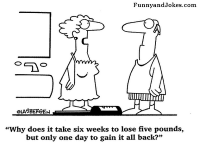
It's been a while since I've discussed the mechanics of weight loss, but I thought it was a good time to go over it again.
The first reality of weight loss is that while losing weight IS a huge bitch, just not gaining it is a bitch.
Let me explain. Several years ago, I resolved to lose 35 pounds. I resolved to increase my exercise regime and eat less, and stick with it no matter how long it took.
To that end, I cut back on calories, and bought a treadmill along with a new TV to put in front of the treadmill. I had been power walking when the weather was nice and time allowed, but I resolved to walk every day no matter what the weather. The treadmill also opened up opportunities to walk since I could do it early in the morning before sunrise, and after school when the kids were home.
The treadmill was delivered and I dutifully walked every day for 45 minutes at a 2 incline at 2.5 miles an hour. I also cut back entirely on processed snacks (only fruit and veggie snacks) and cut back on my portion sizes at all meals.
And, for all that effort, after two months I lost a grand total of one pound.
That sounds awfully discouraging, but the good news is that I lost weight and didn't gain any additional weight. I had been steadily gaining weight for three years, so losing one pound after two months, as opposed to gaining a pound, was a major triumph.
Let me explain. If you want to lose one pound you have to burn an excess of 3,500 calories. Conversely, to gain a pound you have to ingest an extra 3,500 calories over the calories your body otherwise burns.
So if over the last two years you gained 12 pounds (half a pound a month), it means you have to either cut 1,750 calories from your diet a month, or add activities which burn 1,750 a month just to maintain your current weight.
So, in other words, my initial reduction in calories and increase in physical activity merely stopped the weight increase (with a small overall decrease in weight). To actually lose weight I had to cut far more calories from my diet and really increase my physical activity.
And that's the same for everyone. It's easy to get discouraged when your initial efforts result in little or no weight loss. But the reality is, that too many people already have excess calorie intake and not enough exercise, so it's a triumph that you haven't actually gained any more.
But remember, although it's discouraging, it is a start, and despite what the diet gurus tell you, to really lose weight and to keep it off, you have to start slowly and steadily decrease your caloric intake and increase your exercise.
The second reality of weight loss, is that you can probably consume far fewer calories in a day then you think you can just to maintain your current weight--particularly if you're older.
Here's a handy little tool that will tell you how many calories you can consume daily without gaining weight.
http://www.revolutionhealth.com/calculators/daily-calorie-needs
After plugging in the information, I found out that this 48 year old female can only consume a total of 1,787 calories a day just to maintain my weight at 130 pounds. Another reality is that as you lose weight, you have to eat less to both maintain that weight and to lose additional weight. For example, if I get down to my goal of 120 pounds, then I only get to ingest 1692 calories to maintain that weight. That's 95 fewer calories a day.
So to lose weight, I have to find some combination of calorie cuts/exercise to burn an additional 3,500 calories. That means that to lose one pound in a week, I have to burn or not eat an additional 500 calories in a day. For example, to lose 1 pound in a week, I could cut 200 calories a day from my daily intake and exercise enough to burn an additional 300 calories a day.
The third reality is that most foods, particularly processed foods are more calorically dense then you realize. A Starbucks cinnamon roll has 500 calories. A Whopper with cheese has 770 calories.
Remember, I can only consume 1,787 calories a day just to maintain my weight. That is not a lot of calories to play with when you start looking at the actual calories in food, particularly processed foods are foods served at restaurants. That Starbuck's cinnamon roll burns up 28% of my daily calories, the Whopper over 43%. Having a "salad" at some chain restaurants may be enough to "blow" your entire caloric "wad" for the entire day.
The fourth reality is that exercise burns far fewer calories then you realize. For example, if you get on a treadmill and set it at a 2 incline and walk at a 2.5 mph pace, you'll only burn about 200 calories in about an hour. There's more calories then that in a bottle of Snapple flavored ice tea.
To burn off a McDonald's breakfast sandwich (300) calories, you have to run 32 minutes at 5 mph. To burn off that Whopper with cheese you have to swim for 94 minutes at a moderate pace. A large order of fries at Wendy's (540 calories) will take 77 minutes of biking to work off.
So, the bottom line here is that to lose weight for real takes a lot of work. It means dramatically revamping your diet to get rid of processed, calorically dense food and exercising harder, and more frequently. It also means learning to just MOVE more during the day, and learning to love foods that provide a lot of filling bulk with minimal calories.
Monday, September 20, 2010
This is Your Brain on Food
A completely fascinating article on the chemical reactions in our brains when we eat food: http://seedmagazine.com/content/article/this_is_your_brain_on_food/
In summary:
I found this part interesting:
And this:
I think this all plays into the theory that food can be just as addicting as any drug--one reason why losing weight is so hard.
In summary:
The foods we eat, and many of our most popular psychoactive drugs, come from plants or animals. The ingredients in these plant and animal products are very similar if not identical to the neurotransmitters our brains and bodies use to function normally. This is why the contents of our diets can interact with our neurons to influence brain function, and it highlights a very important principle: The chemicals in the food that you eat will only act upon your brain if in some way those chemicals resemble an actual neurotransmitter or otherwise interact with a biochemical process in your brain that influences the production, release, or inactivation of a neurotransmitter. These “active” ingredients deserve close scrutiny.
I found this part interesting:
Morphine-like chemicals capable of acting upon the brain are produced in your intestines when you consume milk, eggs, cheese, spinach, mushrooms, pumpkin, and various fish and grains. Dairy products in particular contain a protein known as casein, which enzymes in your intestines can convert into beta-casomorphin. In newborns, that beta-casomorphin can easily pass out of the immature gut and into the developing brain to produce euphoria.
And this:
Even the spices we use to flavor our food and drink may contain psychoactive chemicals that can alter the function of the brain. The spice nutmeg comes from the nutmeg tree, Myristica fragrans, and contains myristicin, which is chemically quite similar to mescaline and amphetamine. Myristicin and related compounds are also found in carrots, parsley, fennel, dill, and a few other spices—but at very low concentrations, so not to worry about getting intoxicated at the hors d’oeuvres tray. Typically, one must consume about 30 grams of nutmeg powder—or roughly the contents of an entire container of the product that you could purchase at your local grocery store—to experience its psychoactive effects. A single slice of pumpkin pie is unlikely to produce any noticeable effects upon the psyche. Reactions to nutmeg vary considerably, from nothing at all, to euphoria at low doses, to marijuana- and LSD-like experiences at higher doses, with hallucinations that can last up to 48 hours. It all depends upon the amount consumed.
I think this all plays into the theory that food can be just as addicting as any drug--one reason why losing weight is so hard.
Friday, September 17, 2010
Cooking from the Garden and Farmer's Market
This time of year both my garden and the local farmers' markets are over-flowing with bounty. I am positively inundated with eggplants, tomatoes, peppers, zucchini, and cucumbers, along with copious amounts of fresh herbs.
So, as you can imagine, just about every meal during the week focuses on using these fresh ingredients. But let's get real here, we all know that when you have a house, kids, and a job there's often not a lot of time during the week to cook--much less peel, chop and roast vegetables.
So this time of year, just about every weekend, I'm cooking so that I don't have to during the week. When you have to finish up work, then run your daughter up to ballet, and not get home until after six, it's nice to know you have a pot of minestrone in the fridge just waiting to be heated up.
One frequent weekend project is just cooking down vegetables for use during the week. I can chop throw all "need to use them now tomatoes, peppers and eggplants from the garden before they go bad" into a large baking dish with onion, garlic, olive oil and a little vinegar, bake at 400 degrees for 60 minutes and have an Italian vegetable roast that can be tossed into pasta or used as a side dish for during the week.
I also like to use this vegetable roast to make vegetarian calzones. It's easy. I buy whole wheat, uncooked, pizza dough from the market, roll it out, fill with my roasted veggies and mozzarella (and maybe some fresh basil), seal and bake at 425 for about 25 to 30 minutes. I then top it with tomato sauce (also freshly made from the garden but you can use jarred as well).
My vegetable calzone makes a yummy, vegetarian dinner that even my husband doesn't complain about because there's no meat. He actually usually loves to take the left-overs to work for lunch, so I score two vegetarian meals for him!!
It's Called "Exercise"
Want to keep your marbles in your old age? Well, a little aerobic exercise is the way to do it: http://www.huffingtonpost.com/myles-spar-md/is-the-runners-high-a-qui_b_714911.html.
Thursday, September 16, 2010
Subscribe to:
Posts (Atom)